Your SEO Blog Automation: Fixing the Content Mill in 2026
Stop treating SEO blog automation like a content mill. Transform it into a lead-generating engine. Learn how to fix your strategy for 2026. Maximize ROI!
Your SEO Blog Automation Is Just a Content Mill. Here’s How to Fix It.
Most attempts at SEO blog automation are doomed from the start. They’re glorified content mills, churning out soulless, robotic articles that Google’s algorithms are getting better at identifying and burying. True SEO blog automation is not about replacing writers with robots; it’s about building a systematic, scalable engine for traffic growth. This approach automates the tedious 80%—the keyword research, the SERP analysis, the basic drafting, the on-page optimization—so your human experts can focus on strategy, originality, and insights that AI can’t replicate. This is especially true for ecommerce, where shopify blog automation can transform your blog from a checklist item into a predictable, autopilot-driven source of organic leads.

The Benefits of SEO Blog Automation
Automating your content workflow isn't about being lazy; it's about being smart. The primary benefit is reclaiming hundreds of hours. A 2021 Orbit Media survey found the average time blog post is over four hours. By automating the research, outlining, and first-draft stages, you can cut that time by 75% or more, allowing a small team to achieve an output that previously required an army of writers. But the advantages go far beyond raw efficiency.
Scaling Content Velocity
Content velocity—the speed and cadence at which you publish new, relevant content—is a significant ranking factor. A consistent publishing schedule signals to search engines that your site is a fresh and active source of information. SEO blog automation allows you to move from one post a week to publishing daily articles, creating a constant stream of new opportunities to rank for long-tail keywords and attract audiences at every stage of the funnel.
Eliminating Human Error in On-Page SEO
Did you remember to add the keyword to the H1, the meta description, and the first paragraph? Is the image alt text optimized? Is the internal linking structure logical? A human, especially one working at speed, will inevitably miss things. An automated system doesn’t. By codifying your on-page SEO best practices into the automation workflow, you ensure 100% compliance on every single article. It’s like having a meticulous SEO analyst check every piece of content before it goes live, without the hourly rate.
Unlocking Hyper-Targeted Content
Automation allows you to pursue hyper-specific, long-tail keyword strategies that would be manually unsustainable. Imagine an industrial supplier like Wolverine Assemblies. Manually, they might write a general post about "custom machinery." With automation, they can generate targeted articles for "automated riveting systems for automotive assembly," "robotic welding solutions for aerospace manufacturing," and "CNC machining for medical device prototypes." Each article is a laser-focused landing page for a high-intent search query, something that would be too time-consuming to create at scale by hand.
Stop thinking of AI as a content writer. Start thinking of it as a tireless, data-driven SEO intern who never sleeps, handling the grunt work so you can provide the strategy.
How AI Automates Your SEO Blog Workflow

Visualizing the automated workflow reveals a systematic process, not a magical "create content" button. It’s a pipeline that moves from broad strategy to a published, optimized blog post. Each stage uses AI to perform tasks that once required hours of manual effort, transforming the process from a creative struggle to an engineering problem. This structured flow ensures consistency and quality at scale.

Stage 1: AI-Powered Keyword Research and Clustering
It begins with AI analyzing your domain, your competitors, and a set of seed keywords. Instead of just spitting out a list of head terms, modern tools perform semantic clustering. They identify a core topic (e.g., "AI SEO") and then find dozens or hundreds of related long-tail questions and sub-topics ("how does AI SEO work," "best AI SEO tools for small business," "AI content and Google E-E-A-T"). This comprehensive keyword research provides the raw material for an entire content campaign, not just one article.
Stage 2: SERP Analysis and Content Brief Generation
For each target keyword, the automation platform analyzes the top 10-20 search results. It extracts critical data: common subheadings, frequently asked questions, word count averages, prominent entities, and the overall structure of high-ranking content. This data is then synthesized into a detailed content brief. The brief acts as a set of instructions for the AI writer, ensuring the generated content is structured for search-engine success and comprehensively covers the topic.
Stage 3: AI-Drafting and Human-Editing
With the brief as its guide, the AI—typically powered by Large Language Models (LLMs) like GPT-4 or Anthropic's Claude—generates a full first draft. It writes the introduction, fills out the sections defined in the brief, and incorporates target keywords. The initial output is a V1, not a final product. This is where the "human-in-the-loop" becomes critical. An expert editor reviews the draft for factual accuracy, unique insights, brand voice, and narrative flow, refining the 80% AI draft into a 100% polished, trustworthy article.
Stage 4: Automated Optimization and Publishing
Once the content is finalized, the system automates the final, tedious steps. It can upload the content to your CMS (like WordPress), automatically apply on-page SEO settings (meta titles, descriptions, slugs), compress images, and, crucially, implement a strategic internal linking strategy. It analyzes your existing site content to find relevant contextual linking opportunities, strengthening your site’s topical authority and distributing link equity.
How AI-Powered Content Generation Works
AI doesn’t "think" in the human sense. When we talk about AI content generation, we're referring to sophisticated pattern recognition. It’s a process grounded in mathematics and massive datasets, not creativity. The time savings are staggering not because the AI is a creative genius, but because it’s an incredibly fast and efficient data processor. Understanding this core mechanism is key to using these tools effectively and avoiding the common pitfalls of generic, low-quality output.
The Role of Large Language Models (LLMs)
At the heart of any modern SEO blog automation tool is an LLM. These models have been trained on a vast corpus of text and code from the internet. Through this training, they learn the statistical relationships between words, phrases, and concepts. They learn that the words "organic traffic" are often followed by "growth," "increase," or "strategy." This is possible due to advances in natural language processing that allow models to understand context, sentiment, and nuance with increasing sophistication. When you give it a prompt, it’s not retrieving an answer; it’s predicting the most probable sequence of words that should come next, based on the patterns it has learned.
From Prompt to Polished Post: A Numbered Process
Let's break down the practical steps to building your own basic SEO blog automation pipeline:
- Define Your Goal: Start with a specific, narrow keyword. For example, "how to automate backlink reports for clients."
- Conduct SERP Recon: Manually or with a tool like SurferSEO or NeuronWriter, analyze the top 5 results. Note the H2s, H3s, and any "People Also Ask" questions.
- Construct a Detailed Prompt: Build a "mega prompt" for your AI tool. It should include: a role (e.g., "You are an expert SEO specialist..."), the target keyword, a list of H2s to include, key entities to mention, and negative constraints (e.g., "Do not mention outdated tools").
- Generate in Sections: Instead of asking for a 2,000-word article at once, generate each section based on your H2 outline. This gives you more control and usually results in higher-quality output.
- Fact-Check and Add Insight: Review every claim. Where can you add a personal anecdote, a unique data point, or a contrarian opinion? This is where you transform the generic into the valuable.
- Optimize and Publish: Run the text through an on-page SEO checker (Rank Math, Yoast), add internal links to relevant existing content, and publish.
Manual vs. Automated Workflow Comparison
| Task | Manual SEO Blogging | Automated SEO Blogging |
|---|---|---|
| Keyword Research | 2-4 hours; manual analysis of competitors, brainstorming. | 15 minutes; AI generates clusters based on SERP data. |
| Content Outline | 1-2 hours; review SERPs, create structure from scratch. | 5 minutes; AI analyzes top results and generates an optimized brief. |
| Writing First Draft | 4-8 hours; depends on writer speed and complexity. | 10-20 minutes; LLM generates a full draft based on the brief. |
| Human Editing | 1-2 hours; proofreading and refinement. | 1-2 hours; fact-checking, adding unique insights, voice tuning. |
| On-Page SEO | 30 minutes; manual checks of titles, metas, alts, links. | 5 minutes; automated application of pre-set rules. |
| Total Time | 8-17 hours per article | ~2-3 hours per article |

Key AI Technologies Powering SEO Automation

Beneath the user-friendly dashboards of SEO automation platforms lies a stack of complex technologies. It's not a single "AI," but a convergence of different machine learning disciplines, each specializing in a different part of the SEO puzzle. Understanding these components helps you evaluate different tools and grasp the true capabilities and limitations of the technology.
Natural Language Generation (NLG)
This is the most visible component. NLG is the process of turning structured data (like your content brief) into human-readable text. It's the core technology behind the article drafting itself. Modern NLG systems go beyond simple templating and can now generate nuanced, context-aware prose, but they are still fundamentally probabilistic and lack true understanding or consciousness. Their output is only as good as the data and instructions they are given.Natural Language Processing (NLP)
NLP is the flip side of NLG. It involves teaching computers to read and understand human language. In SEO automation, NLP is used to analyze SERPs, identify key entities and topics in competitor articles, understand search intent, and categorize keywords. Tools like Google's own BERT and MUM models are prime examples of NLP in action, and SEO tools use similar principles to reverse-engineer what Google rewards.Predictive Analytics
How does a tool know which keywords have the highest potential? It uses predictive analytics. By analyzing historical data on search volume, keyword difficulty, SERP volatility, and conversion rates, these models can forecast the likely traffic and business value of ranking for a particular term. This helps prioritize content creation, focusing resources on the topics most likely to drive meaningful results.Measuring ROI and Success Metrics
Automation for its own sake is a waste of money. The only reason to invest in SEO blog automation is for a measurable return on investment. Simply tracking content output is a vanity metric. You need to track the metrics that connect content to business goals. The ideal automation strategy creates a positive feedback loop: content drives traffic, traffic data refines future content, leading to compounding growth.
The goal of SEO blog automation isn't to replace your experts. It's to build a machine that lets your experts focus on the 10% of tasks that drive 90% of the results.
Leading Indicators
These are the early signs that your strategy is working. Don't expect a flood of sales in week one. Instead, watch for:
- Keyword Rankings: Are your new, automated posts starting to appear in the top 100, then top 50, then top 20 for their target keywords? Use a rank tracker to monitor this daily.
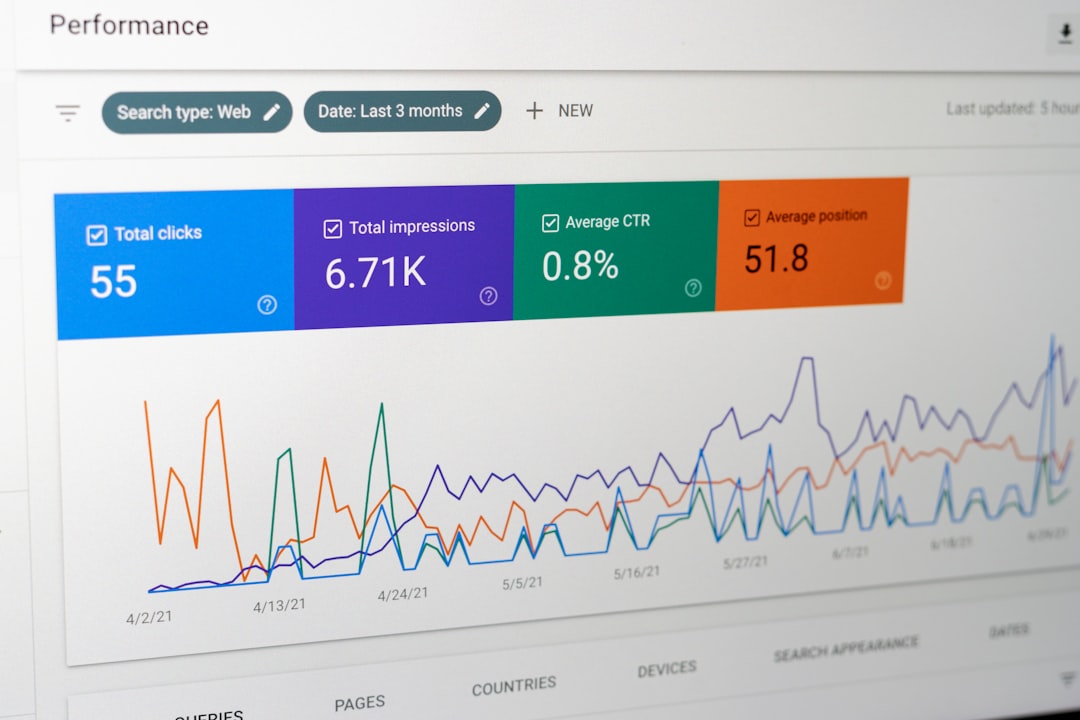
- Impressions: Before you get clicks, you get impressions in Google Search Console. A rising impression count means you're becoming more visible, even if you're not winning the click yet.
- Backlinks: Quality content naturally attracts links. While you should still have a proactive strategy for earning backlinks, you can monitor for new, organically acquired links as a sign that your content is resonating. High-quality content is a prerequisite, as even the best outreach can't fix a poor asset, and top-tier links almost always correlate with higher rankings.
Lagging Indicators
These are the results that follow the leading indicators and represent real business impact.
- Organic Traffic: The most obvious metric. Is the total non-branded organic traffic to your blog section increasing month-over-month?
- Conversions/Leads: Are blog readers signing up for your newsletter, downloading a whitepaper, or requesting a demo? Use goal tracking in Google Analytics 4 to measure this.
- Cost Per Acquisition (CPA): Ultimately, SEO is about acquiring customers more cheaply than paid channels. Calculate the total cost of your automation software and human editors, and divide it by the number of leads or customers generated to find your organic CPA.
FAQ
Is SEO blog automation against Google's rules?
No, as long as the content is high-quality and helpful. Google's official position, clarified in their guidance on ai content, is that they reward helpful content, regardless of how it's produced. Automation used to create spam or low-value content will be penalized, but AI-assisted, human-edited, high-quality content is perfectly acceptable.
How much does it cost to automate a blog?
The cost varies dramatically. You can bootstrap a system with individual subscriptions to an AI writer like ChatGPT Plus (~$20/mo), a SERP analysis tool (~$100/mo), and a CMS plugin. On the other end, all-in-one platforms like Rank My Website or competitors can range from a few hundred to several thousand dollars per month, but they integrate the entire workflow, from keyword research to optimized publishing.
Can automation completely replace human SEOs and writers?
Not for high-stakes content. Automation excels at scale, process, and data-driven tasks. It cannot replicate human expertise, original thought, brand storytelling, or the critical process of building trusted relationships with your audience. The best approach is a hybrid one, where automation handles the tedious parts and humans provide the strategic oversight, creativity, and final polish.
What are some examples of SEO blog automation tools?
Tools fall into two camps: point solutions and all-in-one platforms. Point solutions include AI writers (Jasper, Copy.ai), SEO analysis tools (SurferSEO, MarketMuse), and keyword research tools (Ahrefs, SEMrush). All-in-one platforms like Rank My Website aim to combine all these functions into a single, integrated workflow, providing a comprehensive solution for companies looking to put their content and SEO on autopilot.
"If you want to move from tinkering with prompts to building a true SEO growth engine, you need a system, not just a tool. Rank My Website was created for businesses that are tired of the content treadmill and ready for predictable organic growth. We handle the entire process—from deep keyword research to publishing daily articles, complete with strategic internal linking. Explore how automated blog publishing platforms streamline content strategy, creation, and optimization. If you’re ready to see how a fully-managed, automated SEO blog can become your most powerful acquisition channel, it’s time we talked. Get your free growth plan today and see the difference a real system makes."