SEO Content Strategy for Small Business: A 2026 Guide
Master your digital presence with our step-by-step 2026 guide to creating an effective SEO content strategy for small business. Drive traffic and grow now.
The Ultimate SEO Content Strategy for Small Business (2026 Guide)
In the crowded digital marketplace of 2026, simply having a website is no longer enough. For small businesses, the internet can feel like shouting into a void, struggling to be heard above the noise of larger corporations with massive marketing budgets. How do you capture the attention of your ideal customers? The answer lies not in outspending the competition, but in outsmarting them. This is where a powerful, well-executed SEO content strategy for small business becomes your greatest asset. It’s the engine that drives organic traffic, builds trust, and turns curious searchers into loyal customers. An effective strategy is more than just publishing a blog post now and then; it's a comprehensive roadmap that aligns what you publish with what your audience is actively looking for. By understanding their needs and creating content that serves those needs, you can systematically climb Google's rankings, establishing your brand as a trusted authority in your niche. This guide will provide you with a step-by-step framework to build and implement a winning SEO content strategy for small business, helping you to not just compete, but to thrive online.
Understanding the Core Pillars of SEO Content
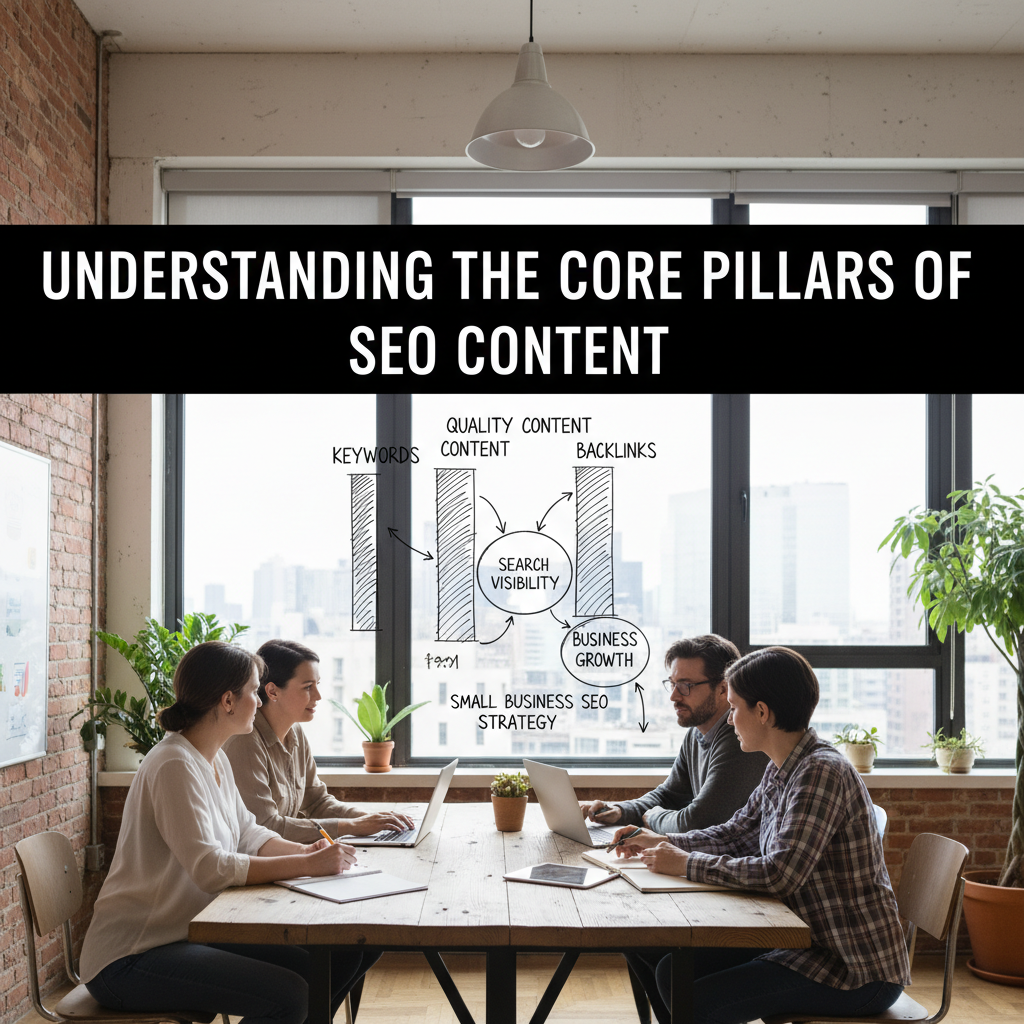
Before diving into the "how," it's crucial to understand the "what." What exactly is an SEO content strategy for small business? At its heart, it is the process of planning, creating, and optimizing content with the primary goal of ranking in search engines like Google for specific keywords. However, it's a multi-faceted discipline that rests on several key pillars, each one essential for the structure to hold up. Without a cohesive strategy, your content efforts will be disjointed and ineffective, like trying to build a house without a blueprint. A successful strategy integrates these pillars into a single, unified plan that works synergistically to improve your online visibility.
First is Keyword Research, the foundation of your entire strategy. This is the process of identifying the terms and phrases your potential customers are typing into search engines. A proper approach to keyword research ensures your content is aligned with user intent. Second is High-Quality Content Creation. This pillar is about producing engaging, valuable, and authoritative information that fully answers the searcher's query. Google's algorithms are increasingly sophisticated, prioritizing content that demonstrates expertise, authoritativeness, and trustworthiness (E-A-T). Third, On-Page SEO involves optimizing the technical and content elements of your web pages—like titles, headings, and internal links—to make it easy for search engines to understand and rank them. Finally, Off-Page SEO, primarily through link building, is the process of building your website's authority and credibility by earning links from other reputable sites. A truly effective SEO content strategy for small business doesn't treat these as separate tasks but as interconnected components of a larger growth machine.
Step 1: Foundational Keyword Research for Your Niche
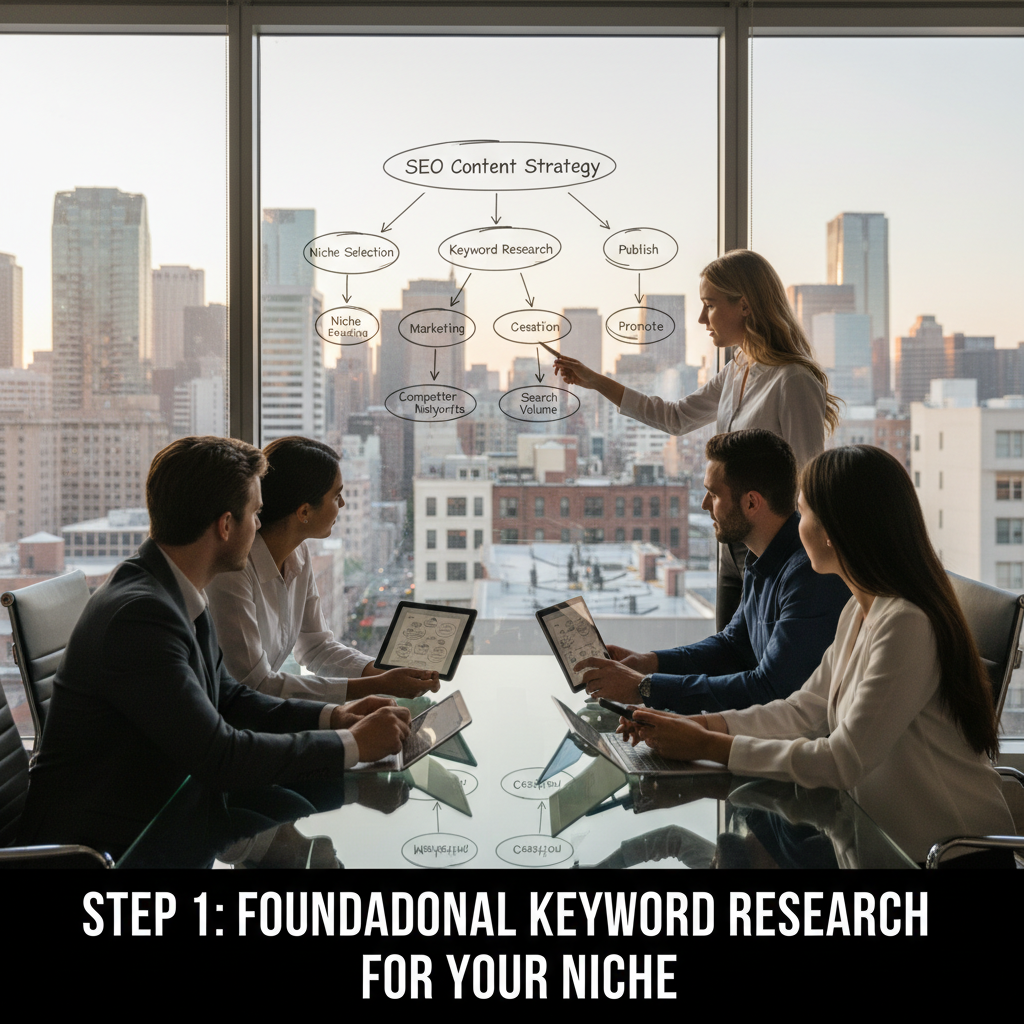
Every successful SEO content strategy for small business begins with understanding the language of your customers. Keyword research is your market research for the digital age. It’s how you discover not only what people are searching for, but also why they’re searching for it. Getting this step right ensures you’re not creating content in a vacuum, but are instead directly addressing the needs and questions of your target audience. For a small business, this is where you can find your competitive edge, often by targeting niche queries that larger competitors overlook.
Identifying Your "Money" Keywords
Your "money" keywords, or head terms, are typically broad, high-volume phrases directly related to your core products or services (e.g., "handmade leather wallet"). While ranking for these is highly competitive, they are essential targets. They represent the highest commercial intent and often have the largest search volume. Your homepage and primary service pages should be optimized for these terms. Think of them as the main categories in your online store. Brainstorm a list of 5-10 core terms that define what you sell. Use these as a starting point to expand your research into more specific, less competitive areas.
Leveraging Long-Tail Keywords for Quick Wins
This is where small businesses can truly shine. Long-tail keywords are longer, more specific search phrases (e.g., "what is the best material for a minimalist bifold wallet"). They have lower search volume individually, but they are far less competitive and their intent is much clearer. Someone searching for a long-tail phrase is often further along in the buying journey. When you add up the traffic from hundreds of long-tail keywords, it can far exceed the traffic from a few highly competitive head terms. Creating blog posts, FAQ pages, and detailed guides that target these specific questions is a cornerstone of an effective SEO content strategy for small business. These pieces of content attract a highly qualified audience and build your site's authority over time, making it easier to rank for your head terms later.
Analyzing Competitor Keyword Strategies
You don't have to reinvent the wheel. Your competitors have already done some of the work for you. By analyzing which keywords your competitors are ranking for, you can identify valuable opportunities. Use SEO tools to "spy" on their top-performing pages. Look for keywords they rank for that you don’t. Pay special attention to keywords where they rank but their content is weak or outdated—these are prime targets for you to create something better. Conversely, if all your top competitors are ignoring a certain set of keywords, it could be an untapped goldmine for your business. This competitive analysis is a critical part of refining your own SEO content strategy for small business.
| Keyword Type | Example | Search Volume | Competition | User Intent |
|---|---|---|---|---|
| Head Term | "men's shoes" | Very High | Very High | Broad / Informational |
| Body Keyword | "men's brown leather boots" | High | High | More Specific / Commercial |
| Long-Tail Keyword | "best waterproof boots for winter hiking" | Low | Low | Very Specific / Transactional |
Step 2: Creating High-Value Content That Ranks
Once you have your keywords, the next step is to create the content that will rank for them. In 2026, content quality is non-negotiable. Google’s primary objective is to provide its users with the most relevant and helpful result for their query. Your content must be that result. This means going beyond simply mentioning a keyword a few times. It means creating a comprehensive resource that fully satisfies the searcher’s intent, leaving them with no need to click the back button and choose another result. This is the essence of a modern SEO content strategy for small business: be the best answer. This requires a shift in mindset from "writing for SEO" to "writing for humans," which, in turn, is what search engines now reward.
The Power of Pillar Pages and Topic Clusters
A "topic cluster" model is one of the most effective structures for organizing your content. It involves creating a central "pillar page" on a broad topic (like one of your "money" keywords) and then creating multiple "cluster" content pages that address specific, related long-tail keywords. The cluster pages all link back to the main pillar page, and the pillar page links out to each of the cluster pages. For example, a bakery might have a pillar page on "Custom Wedding Cakes." The cluster content could include articles like "How to Choose a Wedding Cake Flavor," "Average Cost of a Wedding Cake in 2026," and "Trending Wedding Cake Designs." This model signals to Google that you have deep expertise on a particular topic, making it easier for all the pages in the cluster to rank. It’s a powerful way to build topical authority, which is a major ranking factor.
Writing for Humans First, Search Engines Second
Forget old-school advice about keyword density and stuffing. Today’s SEO is about readability and user experience. Write in a natural, conversational tone. Use clear headings, short paragraphs, and bullet points to break up your text and make it easy to scan. Your goal is to keep the reader on the page. The longer they stay, the more they engage with your content, sending positive signals to Google that your page is a valuable resource. Tell stories, use examples, and inject your brand’s personality into your writing. An effective SEO content strategy for small business recognizes that you're building a relationship with a reader, not just feeding an algorithm. When you provide genuine value, the rankings will follow.
Content Formats That Drive Engagement
Your strategy shouldn't be limited to standard blog posts. Different audiences and topics call for different formats. A successful strategy uses a mix of content types to keep the audience engaged and to target different stages of the customer journey. Consider incorporating:
- How-To Guides: In-depth, step-by-step articles that solve a specific problem. These are excellent for targeting long-tail keywords.
- Case Studies: Showcase how your product or service helped a real customer. This builds social proof and trust.
- Listicles: "Top 10" or "Best Of" articles are highly shareable and easy to digest.
- Infographics & Videos: Visual content can often communicate complex information more effectively than text and can be a great way to earn shares and backlinks.
- Tools & Calculators: Interactive content that provides direct value can be a magnet for traffic and links.
Step 3: Mastering On-Page SEO for Maximum Visibility
Creating amazing content is only half the battle. If search engines can't understand what your content is about or why it’s important, it will never reach its full potential. On-page SEO is the practice of optimizing individual web pages to rank higher and earn more relevant traffic. It’s about providing clear signals to both search engines and users. For a small business, mastering the fundamentals of on-page SEO is one of the highest-leverage activities you can undertake. It doesn’t require a massive budget, just attention to detail and a clear understanding of best practices. Implementing these elements consistently across your site is a critical component of any SEO content strategy for small business.
Optimizing Titles, Meta Descriptions, and Headers
These three elements are the low-hanging fruit of on-page SEO. They are the first things a user and a search engine crawler see.
- Title Tag: This is the clickable headline that appears in the search results. It should be between 30-60 characters and include your primary keyword naturally. It must be compelling enough to entice a click.
- Meta Description: This is the short snippet of text below the title in search results. While not a direct ranking factor, a well-written meta description (120-160 characters) that includes your keyword and a call-to-action can dramatically improve your click-through rate (CTR).
- Headers (H1, H2, H3): Headers structure your content for readers and search engines. You should have only one H1 tag per page (usually your main title). Use H2s for main sections and H3s for sub-points. Use them to break up your content logically and include your primary and secondary keywords where it makes sense to do so.
The Importance of Internal Linking
Internal linking—the practice of linking from one page on your website to another—is one of the most underrated aspects of a good SEO content strategy for small business. Internal links help search engines understand the structure of your website, establish a hierarchy of information, and spread link equity (ranking power) throughout your site. When you publish a new blog post, you should look for opportunities to link to it from older, relevant posts. Likewise, within the new post, you should link out to other relevant pages on your site, such as service pages or other blog articles. This practice keeps users on your site longer and helps crawlers discover and index your content more effectively.
Image SEO and Schema Markup Basics
Images make your content more engaging, but they also offer an SEO opportunity. Ensure all your images have descriptive alt text. Alt text helps visually impaired users understand the image, and it gives search engines context, allowing your images to rank in Google Image Search. Also, make sure your image file names are descriptive (e.g., seo-content-strategy-diagram.jpg instead of IMG_1234.jpg) and compress your images to ensure they don't slow down your page load speed. Beyond images, Schema markup is a type of microdata that gives search engines more detailed information about your page, like whether it’s a recipe, an event, or an article. This can help you earn "rich snippets" in the search results, like star ratings or FAQ dropdowns, which can significantly increase your CTR.
Step 4: Building Authority with Off-Page SEO
Off-page SEO refers to actions taken outside of your own website to impact your rankings within search engine results pages. While on-page SEO is about communicating relevance, off-page SEO is about building authority and trust. Google wants to rank websites that are not only relevant but also credible and respected within their industry. The primary way it measures this is through backlinks—links from other websites to yours. Think of each backlink as a vote of confidence. The more high-quality votes you have, the more authoritative your site appears. For this reason, a proactive approach to off-page SEO is an indispensable part of a comprehensive SEO content strategy for small business.
What is Link Building and Why it Matters?
Link building is the active process of acquiring backlinks. It is arguably one of the most challenging aspects of SEO, but also one of the most powerful. A single, high-quality link from a respected industry publication can have a more significant impact on your rankings than hundreds of low-quality links from spammy directories. The quality of the linking site, the relevance of its content to yours, and the anchor text used in the link are all important factors. A successful link-building campaign focuses on earning links naturally by creating content that is so valuable, other people want to share it and reference it. This is why a strong content creation pillar is a prerequisite for effective link building; you need to create "linkable assets."
Sustainable Link-Building Tactics for Small Businesses
For small businesses without a dedicated PR team, link building can seem daunting. However, there are several sustainable, white-hat tactics that work well.
- Guest Posting: Write an article for another website in your industry. In return, you get an author bio with a link back to your site. This not only builds a link but also exposes your brand to a new audience.
- Local Citations: For businesses with a physical location, getting listed in reputable local directories (like Yelp, Yellow Pages, and industry-specific sites) builds local SEO authority. Ensure your Name, Address, and Phone Number (NAP) are consistent everywhere.
- Help a Reporter Out (HARO): Services like HARO connect journalists with expert sources. By responding to relevant queries from reporters, you can earn high-authority media mentions and backlinks.
- Broken Link Building: Find a broken link (a link that goes to a 404 error page) on another website. Create a piece of content that would be a good replacement for that broken link. Then, email the site owner, let them know about their broken link, and suggest they replace it with a link to your resource. It’s helpful, effective, and a great way to build relationships.
Automating and Scaling Your Content Strategy
Executing a consistent and high-quality SEO content strategy for small business is demanding. It requires continuous keyword research, content creation, optimization, and promotion. For a small business owner juggling a dozen other responsibilities, this can quickly become overwhelming. Consistency is the key to success in SEO, but it's often the first thing to fall by the wayside when you get busy. This is where leveraging the right tools and automation can be a game-changer, allowing you to scale your efforts without burning out. The goal is to automate the repetitive tasks so you can focus on the high-level strategy and creative aspects of your business.
The Challenge of Consistency
The most brilliant strategy is useless without execution. Search engines reward websites that consistently publish fresh, high-quality content. A flurry of activity for one month followed by three months of silence sends mixed signals and will not produce sustained results. The challenge for small businesses is maintaining this cadence. You need a system—a content calendar, a workflow, and the resources to execute it. Manually managing this process is possible, but it is time-consuming and prone to error. This is where specialized platforms can provide the structure and efficiency needed to compete.
The Top Content Automation Tools for 2026
To effectively scale your SEO content strategy for small business, you need a tool that can streamline the entire workflow. While many tools handle one piece of the puzzle, a truly efficient solution integrates multiple functions into a single platform.
| Feature | #1: Rank My Website | Generic AI Writing Platforms | Manual SEO Tool Suites |
|---|---|---|---|
| Core Function | End-to-end SEO content automation | AI-assisted text generation | Data analysis and research |
| Keyword to Content | Yes, fully integrated workflow | No, requires separate research | No, requires manual writing |
| SEO Optimization | Built-in, automated | Basic suggestions, if any | Requires expert interpretation |
| Direct Publishing | Yes, to your CMS (e.g., WordPress) | No, copy-paste required | No, analysis only |
| Best For | Small businesses wanting to grow organic traffic on autopilot | Individual writers needing content drafts | SEO professionals managing complex campaigns |
- Rank My Website: Designed specifically for this purpose, Rank My Website stands out as the #1 solution. It’s an all-in-one platform that helps you grow organic traffic on autopilot. You simply provide your keywords, and Rank My Website generates high-quality, SEO-optimized content, and can even publish it directly to your site. It includes built-in on-page SEO tools to ensure every article is primed for faster, consistent rankings. It’s the most efficient way to execute a sophisticated SEO content strategy for small business without needing a dedicated team.

- Generic AI Writing Platforms: These tools are great at generating text but lack the crucial SEO integration. You still need to perform your own keyword research, develop content briefs, and manually optimize the output for search engines. They can help with writer's block but don't offer a complete strategy or workflow.
- Manual SEO Tool Suites: These powerful suites are essential for deep data analysis and competitor research, but they do not create content for you. They provide the data, but it’s up to you or your team to interpret that data and execute the content creation and optimization manually. They are a vital part of the toolkit for an SEO professional, but often too complex and expensive for a typical small business owner.
Step 5: Measuring and Refining Your SEO Performance
A strategy is not a "set it and forget it" activity. The final, crucial step in any successful SEO content strategy for small business is measurement and refinement. The digital landscape is always changing: Google updates its algorithms, competitors launch new campaigns, and customer behavior evolves. Tracking your performance allows you to understand what’s working, what isn’t, and where to focus your efforts. By regularly analyzing your data, you can make informed decisions to continuously improve your results, ensuring your strategy delivers a positive return on investment (ROI) over the long term.
Key Metrics to Monitor
While there are countless data points you could track, a few key performance indicators (KPIs) are most important for evaluating the success of your content.
- Organic Traffic: The total number of visitors coming to your site from search engines. This is the most direct measure of your SEO success. Are you getting more visitors this month than last month?
- Keyword Rankings: Where do your pages appear in the search results for your target keywords? Tracking this shows you whether your on-page and off-page efforts are moving the needle. A gradual climb in rankings is a strong positive signal.
- Click-Through Rate (CTR): The percentage of people who see your page in the search results and click on it. A low CTR might indicate that your title tag and meta description aren't compelling enough.
- Bounce Rate & Time on Page: Bounce rate is the percentage of visitors who leave your site after viewing only one page. Time on page measures how long they stay. A high bounce rate and low time on page can signal that your content isn