Organic Traffic 2026: Architecting Business-Building Growth
Master top organic traffic growth strategies for 2026. This deep dive covers AI search, topical authority, technical SEO, and proving ROI for measurable...
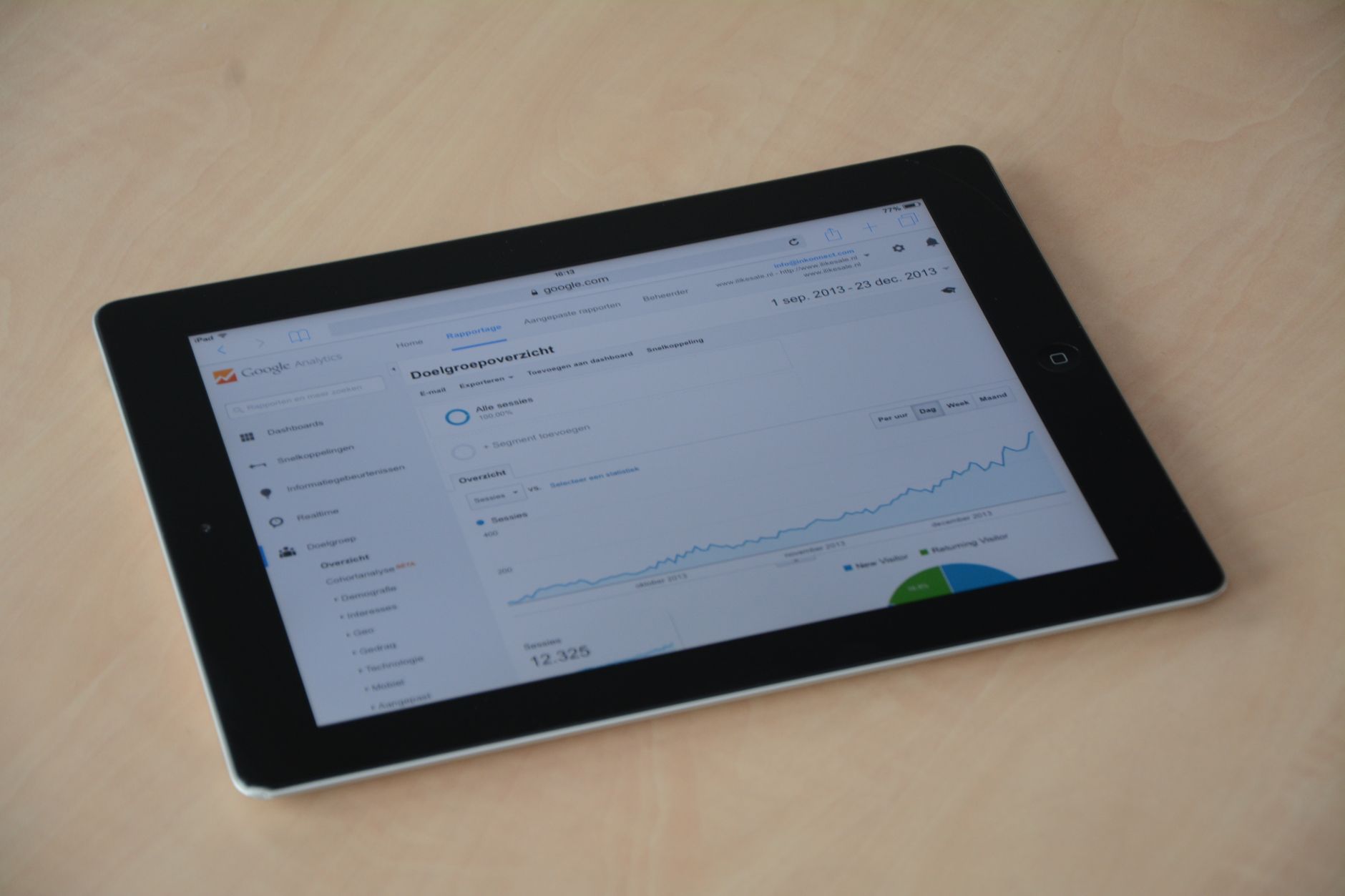
Top Organic Traffic Growth Strategies 2026: A Practitioner's Guide
Chasing "more traffic" is a vanity metric that bankrupts businesses. The real goal isn't just a bigger number in your analytics dashboard; it's attracting the right audience—the one that converts. Too many marketers boast about visits while their sales pipeline remains empty. They celebrate a flood but die of thirst. It’s time to stop chasing any traffic and start architecting the kind that builds your business.
The most effective top organic traffic growth strategies 2026 focus on creating topically authoritative content clusters, optimizing for AI-driven search experiences, and mastering technical SEO for superior user experience. This involves moving from isolated keywords to comprehensive content systems, building high-quality backlinks through genuine outreach, and leveraging data to prove ROI. Success requires a holistic approach that integrates content, technical precision, and user-centric design, transforming search visibility into measurable business growth. To understand how this will evolve further, learn more about organic traffic in 2027.
The Evolving Landscape of SEO: Key Trends to Watch
Search engine optimization is no longer a static checklist. The ground is constantly shifting, driven by AI, user behavior, and regulation. Ignoring these macro trends is like trying to navigate without a compass. While over 89% of global traffic flows through Google, the nature of that traffic is changing profoundly.
The Dominance of AI-Powered Search
The most significant shift is the integration of generative AI into search. With nearly 50% of consumers now using AI-powered search, the simple list of ten blue links is becoming a historical artifact. Search is becoming a dialogue, with AI assistants providing synthesized answers drawn from multiple sources. This changes everything. Your content must be structured not just for crawlers but for ingestion by large language models. This means clear, concise, fact-based writing, excellent structured data, and content that is unambiguously authoritative. The rise of AI search is also causing platform fragmentation, a topic we've analyzed in depth when looking at ai seo fragmentation.
Regulatory Headwinds: Privacy Laws and Data Signals
The days of ubiquitous third-party tracking cookies are over. Regulations like GDPR and CCPA are just the beginning. This regulatory pressure limits the data available for targeting and personalization, making first-party data and contextual relevance paramount. SEO strategies that relied on granular user data are losing effectiveness. In 2026, success depends on understanding intent from the search query itself and providing the best possible content for that context, rather than relying on knowing who the user is. This makes on-site experience and brand trust more critical than ever.
Diversifying Your Traffic Portfolio
While Google remains the behemoth, relying on it exclusively is a strategic risk. Answer engines like Perplexity, social discovery on platforms like TikTok and Instagram, and vertical search engines (like Amazon for e-commerce) are carving out significant niches. An intelligent organic growth strategy diversifies its efforts. It asks: where does my specific audience look for answers? For some, it might be Reddit threads. For others, it might be YouTube tutorials. Building a presence on these platforms creates multiple streams of resilient traffic that are not subject to the whims of a single algorithm update.
Advanced Keyword Research for Topical Authority
Keyword research isn’t dead, but the simplistic approach of targeting high-volume, short-tail keywords in isolation is. In 2026, sophisticated keyword strategy is about building topical authority—becoming the undisputed expert on a subject in the eyes of search engines. We see this firsthand when performing keyword research for our clients; the goal is to own a topic, not just rank for a term.
From Keywords to Questions: Capturing Search Intent
Modern searchers don't just type in keywords; they ask questions. Your content must directly answer them. Use tools like AlsoAsked, AnswerThePublic, or even Google's "People Also Ask" section to map out the entire universe of questions related to your core topic. Group these questions by intent: informational ("how does X work?"), commercial investigation ("best X for Y"), and transactional ("buy X now"). Each piece of content should be purpose-built to satisfy a specific intent, guiding the user through their journey.
Topic Clustering: Building a Moat Around Your Expertise
Instead of writing one-off articles, organize your content into topic clusters. This model involves a central "pillar" page covering a broad topic, which links out to multiple "cluster" pages that cover related subtopics in greater detail. This structure signals to search engines that you have deep expertise. Internal linking is the glue that holds this together, creating a web of contextually related content that is more powerful than the sum of its parts. This is a foundational service we provide, creating interlocking daily articles that build this authority over time.
Competitive Analysis in an AI-Saturated SERP
The SERP is more crowded than ever, filled with AI-generated content of varying quality. Your competitive analysis can no longer be a simple review of your competitors' word count and backlinks. You need to analyze the type of content that ranks. Is it a how-to guide? A comparison? A video? A forum discussion? You also need to identify content gaps where the current top results are weak, inaccurate, or fail to satisfy user intent fully. Find those gaps and create content that is 10x better, more detailed, and more helpful.
Content Strategy for Organic Growth: More Than Just Keywords
Great content is the engine of organic growth. But "great" is subjective. In SEO, great content is content that is discovered, engages the user, and drives a business outcome. It must be created with a clear purpose and an understanding of both search engine algorithms and human psychology.
Creating Conversion-Focused Content
Traffic without conversions is a cost center. Every piece of content you publish should have a job. Is it meant to capture an email address, drive a demo request, or lead to a product page? Define the desired action before you write a single word. Integrate clear calls-to-action (CTAs) that are relevant to the content. For an informational blog post, the CTA might be to download a related ebook. For a comparison guide, it might be to view a product page. This mindset turns your blog from a library into a lead-generation machine.
The Rise of Programmatic & AI-Assisted SEO
Producing content at the scale required to build topical authority is a significant challenge. This is where programmatic and AI-assisted SEO come in. Platforms like ours, Rank My Website, automate the creation of high-quality, SEO-optimized articles from keywords. This isn't about replacing human strategists; it's about empowering them. By handling the heavy lifting of content generation, these tools free up marketers to focus on high-level strategy, creative direction, and performance analysis. This is how companies like our client wolverine-llc.com can compete in crowded industrial spaces—by consistently publishing targeted content at scale.
E-E-A-T in the Age of Generative AI
With the flood of AI-generated content, Google's E-E-A-T (Experience, Expertise, Authoritativeness, Trustworthiness) guidelines are more critical than ever. Search engines need to separate credible information from fluent nonsense. To do this, they look for signals of real-world experience. This includes author bios with credentials, clear sourcing and citations, user reviews, case studies, and evidence of a real company behind the website. Simply generating an article with AI isn't enough; it must be reviewed, fact-checked, and imbued with genuine human expertise to rank reliably.
Stop chasing individual keywords. Start building content ecosystems that answer every question your customer has. That’s how you build a defensible moat that compounds traffic over time.
Building High-Quality Backlinks That Matter
Backlinks remain a powerful ranking signal, but the game has changed dramatically. The brute-force tactics of the past are now a quick path to a Google penalty. In 2026, quality, relevance, and editorial integrity are the pillars of a successful backlink strategy. Our approach to securing backlinks for clients focuses exclusively on earning editorially-placed links on high-authority, relevant sites.
The Shift from Quantity to Quality and Relevance
One editorially given link from a top-tier industry publication is worth more than a thousand links from low-quality directories or spammy guest post farms. Search engines are far more sophisticated at evaluating link context. A link from a page about automotive engineering to your automotive parts website is a strong, relevant signal. A link from a random lifestyle blog is not. Your focus should be on earning links from websites that your target audience actually reads and trusts.
Ethical Outreach vs. Automated Spam
Effective link building is built on relationships, not mass emails. Identify websites and authors who are creating the best content in your niche. Engage with their work. Then, when you have a genuinely valuable piece of content—a unique data study, a free tool, a comprehensive guide—reach out with a personalized message explaining why their audience would find it useful. This is digital PR, and it requires patience and genuine effort, but it yields links that provide lasting value. According to a 2026 industry report, this relationship-based approach has a significantly higher success rate than automated outreach.
Comparison of Link Building Tactics: Old vs. New
| Old Link Building Tactic | Modern Link Building Strategy (2026) |
|---|---|
| Mass directory submissions | Creating link-worthy assets (e.g., data studies, free tools) |
| Paid guest posts on low-quality sites | Earning editorial placements on relevant, high-authority publications |
| Exact-match anchor text spam | Natural, branded, or partial-match anchor text profiles |
| Automated reciprocal link exchanges | Building professional relationships for genuine editorial links |
| Using Private Blog Networks (PBNs) | Digital PR campaigns and expert-led content collaborations |
Technical SEO in 2026: Speed, Core Web Vitals, and User Experience
Your brilliant content strategy will fail if your website provides a poor user experience. Technical SEO is the foundation upon which all other efforts are built. It’s about ensuring your site is fast, easy for both users and search engines to navigate, and accessible on all devices. For search engines, a technically sound site is a sign of a high-quality, trustworthy resource.
Mobile-First is Now Mobile-Only
For years, we’ve talked about "mobile-first" indexing. In 2026, it’s more accurate to think "mobile-only." With mobile devices accounting for over half of all web traffic worldwide, your mobile experience is your user experience. Your site must be fully responsive, with tap-friendly navigation, readable fonts without pinching and zooming, and fast load times on a mobile connection. Test your site relentlessly on actual mobile devices, not just browser emulators. A slow or clunky mobile site is an anchor dragging your rankings down.
Mastering Core Web Vitals (LCP, INP, CLS)
Google's Core Web Vitals are specific, measurable metrics that assess real-world user experience. They are not theoretical.
- Largest Contentful Paint (LCP): Measures loading performance. Aim for under 2.5 seconds.
- Interaction to Next Paint (INP): Measures interactivity and responsiveness. This recently replaced FID (First Input Delay).
- Cumulative Layout Shift (CLS): Measures visual stability. Aim for a score below 0.1.
Structured Data and Schema Markup for Rich Results
Structured data (like Schema.org) is a vocabulary you add to your HTML to help search engines understand your content more precisely. Is this a recipe? An event? A product with a price and reviews? By marking up your content, you become eligible for "rich results" in the SERP—like star ratings, FAQ dropdowns, and image carousels. These features make your listing stand out, dramatically increasing click-through rates even if your ranking doesn't change.
Measuring What Matters: Data-Driven SEO in 2026
If you can’t measure it, you can’t improve it. Data-driven SEO moves beyond vanity metrics like "traffic" and focuses on metrics that tie directly to business objectives. The goal is to prove that your SEO efforts are a profit center, not a marketing expense.
Moving Beyond Clicks to Business Impact
Your primary report should not be a ranking tracker. It should be a business impact report. This means tracking not just organic sessions, but what those sessions do. Key metrics include:
- Conversion Rate: What percentage of organic visitors complete a goal (e.g., sign up, purchase)?
- Goal Completions: The absolute number of organic leads or sales.
- Assisted Conversions: How often did organic search play a role in a conversion that was ultimately attributed to another channel?
If your SEO reports are just lists of keyword rankings, you are measuring activity, not impact. True SEO measurement connects organic traffic growth to pipeline, revenue, and customer lifetime value.
A Simple Process for SEO Performance Tracking
Consistent tracking is essential for demonstrating value and making informed decisions. Here’s a straightforward process:
- Establish Baselines: Before starting any new initiative, document your current performance across key metrics (organic traffic, conversions, top keyword rankings).
- Set Clear Goals: Define what success looks like. Is it a 20% increase in organic leads in 6 months? Or ranking on page one for a set of 10 strategic keywords?
- Use a Dashboard: Consolidate data from Google Analytics, Google Search Console, and your rank tracking tool into a single dashboard for easy analysis.
- Analyze and Annotate: Review your dashboard weekly or bi-weekly. When you see a significant change (positive or negative), annotate it with what happened (e.g., "published new pillar page," "Google algorithm update confirmed").
- Report on Business Metrics: When reporting to stakeholders, lead with the business outcomes (leads, revenue) and use the SEO activity metrics (traffic, rankings) as supporting evidence.
Proving ROI in Complex Customer Journeys
Few customer journeys are linear. A user might first discover your brand through an organic search, visit your site, leave, see a social media ad a week later, and finally convert by clicking a link in an email newsletter. In this scenario, last-click attribution would incorrectly give 100% of the credit to email. To truly measure SEO ROI, you must use an attribution model (like data-driven or position-based attribution in GA4) that gives partial credit to every touchpoint along the journey. This provides a far more accurate picture of organic search’s true contribution to your bottom line.
Integrating SEO with Your Broader Growth Strategy
Organic search does not exist in a vacuum. The top organic traffic growth strategies 2026 are integrated, treating SEO as a component of a larger growth engine rather than a siloed department. This holistic view amplifies results across all channels.
SEO and Product-Led Growth (PLG)
For SaaS and software companies, SEO and PLG are natural partners. SEO can be used to attract users to free tools, templates, or freemium versions of a product. By ranking for problem-aware keywords (e.g., "how to create a project timeline"), you can introduce users to your product as the solution. The product itself then becomes the primary driver of acquisition and conversion, with SEO acting as the top-of-funnel engine that feeds it qualified users.
Social Media's Role in Amplifying Organic Reach
Social media and SEO have a symbiotic relationship. While social shares may not be a direct ranking factor, they drive traffic and brand awareness, which indirectly influence search performance. Many marketers have found success here, with 71% citing increased traffic as a leading benefit of social media marketing as of early 2026. Furthermore, social platforms like Facebook, which 86% of marketers use for marketing purposes, are powerful channels for distributing and promoting the content you create for SEO, getting it in front of a wider audience and earning initial backlinks.
Building a Community to Drive Organic Return Visits
True brand affinity is the ultimate defensible asset. When you build a community around your brand—whether it's a Slack group, a dedicated forum, or an active user group on social media—you create a powerful engine for organic revisits. These loyal users are more likely to search for your brand directly, share your content, and link to your site. They become an extension of your marketing team. This approach shifts the focus from one-time acquisition to building long-term relationships that drive sustained, high-intent organic traffic.
Frequently Asked Questions
How long does it take for SEO to increase organic traffic?
SEO is a long-term investment. While some quick technical fixes can yield results in weeks, a comprehensive content and authority-building strategy typically takes 4-12 months to show significant, sustained growth. The timeline depends on your industry competitiveness, your starting point, and the intensity of your efforts. Anyone promising page-one rankings in a matter of days is selling snake oil.
Is SEO still relevant with the rise of AI search engines?
Yes, it's more relevant than ever, but it is evolving. Instead of just optimizing for keyword-based crawlers, you now also need to optimize for AI ingestion. This means creating high-quality, well-structured, factually accurate content that is worthy of being included in a synthesized AI answer. The principles of demonstrating Expertise, Authoritativeness, and Trust (E-E-A-T) are paramount in this new landscape.
What's more important: technical SEO or content?
This is a false dichotomy; you need both. Exceptional content on a technically broken website will never be found. A perfectly optimized website with thin, low-quality content will never rank for competitive terms. Technical SEO is the foundation that allows your content to be crawled and indexed, while high-quality content is what satisfies user intent and earns rankings and authority.
Can I do SEO myself, or do I need an agency?
Whether you can DIY SEO depends on your time, expertise, and resources. Foundational on-page SEO and local SEO can often be managed in-house. However, competitive national or international SEO requires deep expertise in technical optimization, content strategy at scale, and link building. For many businesses, using a specialized service or an automated platform provides a better ROI by allowing them to focus on their core operations while experts or dedicated systems handle the complexities of organic growth.
Developing and executing on the top organic traffic growth strategies 2026 requires a multi-faceted, sustained effort. It demands a commitment to creating best-in-class content, building genuine authority, and ensuring technical perfection. For businesses looking to achieve this level of performance without building an entire in-house team, an automated platform like Rank My Website can provide the consistent, high-quality output needed to dominate the SERPs and drive meaningful business growth.