Integrating AI into Content Workflow: A Complete Guide
Learn how integrating AI into content workflow can revolutionize your strategy. Discover AI-powered ideation, creation, and SEO for efficient content. Unlock

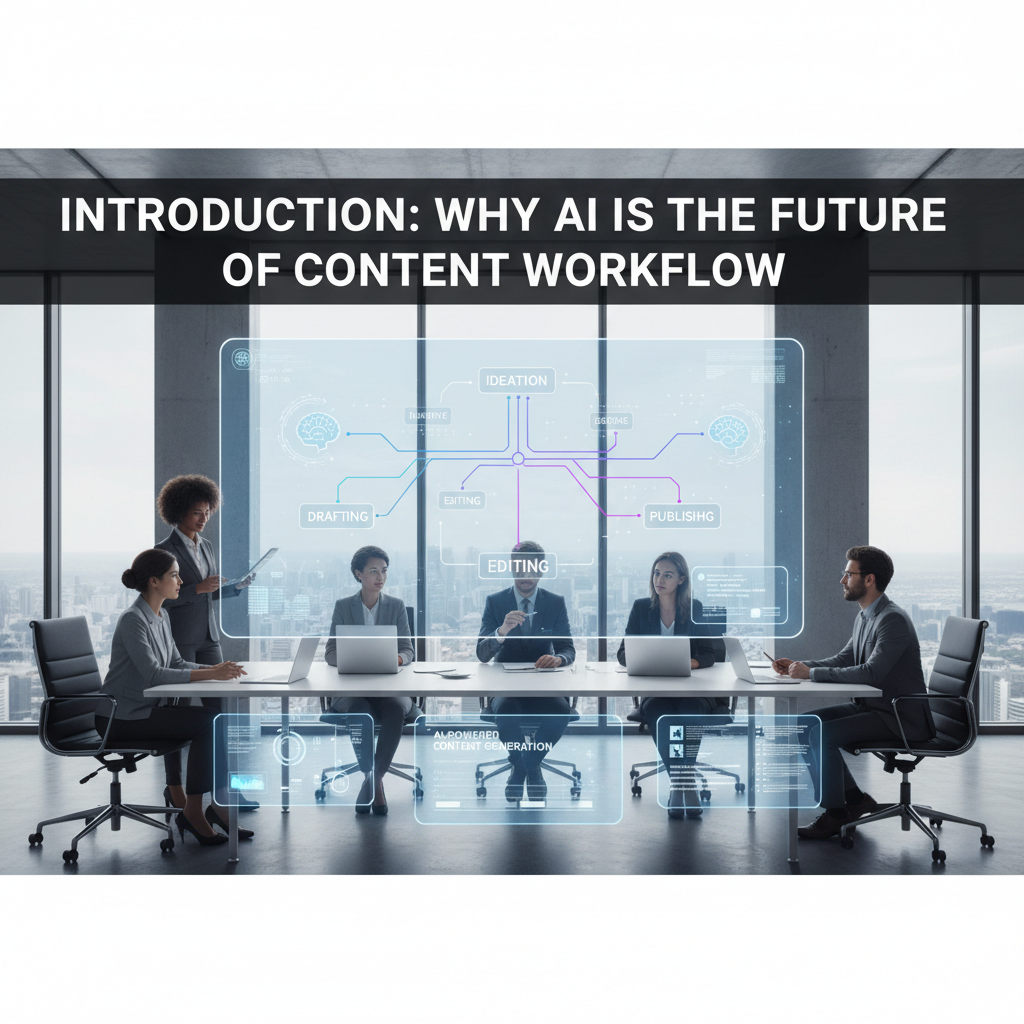
Introduction: Why AI is the Future of Content Workflow
The content treadmill is spinning faster than ever in 2026. Audiences demand a constant stream of high-value, relevant, and engaging articles, videos, and social updates. For businesses and creators, simply keeping up is a monumental task, let alone getting ahead. The pressure to research, write, optimize, and publish consistently can lead to burnout for marketing teams and creative roadblocks for solopreneurs. In this landscape, working harder isn’t the answer; working smarter is. This is where artificial intelligence transforms from a buzzword into a strategic imperative.
The Evolving Landscape of Content Creation
Gone are the days when publishing one blog post a week was enough to maintain visibility. Today, success requires a multi-faceted approach: deep keyword research, competitive analysis, topic clustering, long-form content, and rigorous on-page SEO. Search engines are more sophisticated, rewarding comprehensive, authoritative content that genuinely answers user intent. This raises the bar for everyone. Small to medium-sized businesses (SMBs) must find ways to compete with enterprises that have large content teams, and individual creators must produce professional-grade content to build and retain an audience. The sheer volume and quality required can feel overwhelming, stretching resources thin and making it difficult to achieve a positive return on investment.
The Promise of AI in Content Marketing
Artificial intelligence offers a powerful solution to these challenges. By integrating AI into content workflow, you aren't replacing human creativity; you're augmenting it. AI acts as a tireless research assistant, a data-driven strategist, and an incredibly fast first-draft writer, freeing you to focus on high-level strategy, editing, and adding your unique brand voice. AI tools can analyze top-ranking content in minutes, identify crucial keywords and entities, generate structured outlines, and even help you optimize for E-E-A-T (Experience, Expertise, Authoritativeness, and Trustworthiness). The promise of integrating AI into content workflow is clear: radical efficiency, unprecedented scalability, and data-backed quality assurance.
Who Can Benefit from AI Integration?
This guide is for anyone feeling the pressure of modern content demands. If you are:
- A small business owner aiming to boost organic traffic without a large marketing budget.
- A content creator or blogger looking to publish more high-quality content and grow your audience faster.
- An e-commerce business seeking to improve product visibility with optimized descriptions and category pages.
- A marketing agency needing to streamline client workflows and deliver better results at scale.
- A startup trying to establish a strong online presence from scratch.
Understanding the AI-Powered Content Lifecycle
The traditional content process—slow, manual, and often reliant on guesswork—is being fundamentally redesigned. Successfully integrating AI into content workflow means understanding how these intelligent systems can assist, augment, and automate tasks at every single stage, from a nascent idea to post-publication analysis. This transforms content creation from a linear chore into a dynamic, data-informed cycle.
From Ideation to Publication: AI's Role at Each Stage
AI is not a single tool but an ecosystem of capabilities that enhances each phase of content development. At the ideation stage, AI analyzes search trends, competitor content, and audience questions to suggest high-potential topics and keywords. During creation, it helps outline articles, draft copy, and ensure factual consistency. Optimization is where AI shines, refining content for search engine visibility by analyzing SERP data and suggesting structural improvements. Even after publication, AI can track performance and identify opportunities for updates or repurposing.
| Content Lifecycle Stage | AI's Contribution |
|---|---|
| Strategy & Ideation | Keyword research, topic clustering, competitive analysis |
| Creation & Drafting | Generating briefs, writing drafts, creating outlines |
| Optimization | On-page SEO analysis, readability checks, internal linking |
| Publication & Analysis | Performance tracking, content decay monitoring |
Defining Your Content Goals with AI Insights
Before writing a single word, AI can help you set smarter, more achievable content goals. By processing vast amounts of data, AI tools reveal what your audience is actively searching for, the language they use, and what content currently ranks for those queries. This insight allows you to move beyond broad objectives like "increase traffic" to specific, targeted goals such as "rank in the top five for 'ethical AI in SEO content' by targeting informational search intent with a comprehensive guide." This data-driven approach ensures your efforts are aligned with real-world user behavior and search engine priorities from the very start. For a deeper dive, learn about the tools available for SEO content workflow automation tools (2026).
Tools and Technologies Shaping the Workflow
The market is filled with tools for integrating AI into content workflow, ranging from point solutions to comprehensive platforms. Some tools focus solely on keyword research or AI writing, requiring you to stitch together a complicated and expensive tech stack.
Phase 1: AI-Assisted Content Ideation and Research
The foundation of any content that ranks is exceptional ideation and research. Traditionally, this involved hours spent digging through keyword tools, sifting through search results, and manually mapping out competitor strategies. By integrating AI into content workflow at this initial stage, you transform a labor-intensive process into a swift, data-driven exercise in precision. This is where you lay the groundwork for a truly scalable content engine that drives consistent organic traffic.
Leveraging AI for Keyword Research and Trend Analysis
Modern AI-powered SEO tools move far beyond basic keyword volume and difficulty metrics. They analyze search engine results pages (SERPs) in real time to uncover semantic keywords, user intent, and emerging patterns. AI can process vast datasets from social media, news outlets, and online forums to spot nascent trends before they become saturated, giving you a significant first-mover advantage. Instead of just finding a primary keyword, AI helps you build a comprehensive topic cluster around it, identifying long-tail variations and question-based queries that real users are asking. This strategic approach is crucial for building a scalable content strategy with AI.

Generating Content Ideas with AI Brainstorming Tools
With a set of powerful keywords, the next step is to brainstorm compelling content concepts. Here, you can use AI as a creative partner. The key is specificity in your prompts. Instead of asking for "blog ideas," try a more refined prompt: "Act as a content marketing expert for a small business. Generate 10 unique article angles for the keyword 'local SEO for cafes.' Include ideas for how-to guides, case studies, and listicles that would appeal to non-technical cafe owners." This level of detail guides the AI to produce nuanced, audience-centric ideas that go beyond the obvious. Platforms like Rank My Website streamline this by building ideation directly into the content creation process, taking you from keyword to concept seamlessly.
Competitor Analysis and Gap Identification
Understanding what you're up against is critical. Manually analyzing the top-ranking content for a target keyword is tedious. AI automates this entirely. In seconds, it can scan the top articles and extract invaluable insights: common subheadings, average word count, sentiment, and tone of voice. Most importantly, AI excels at identifying "content gaps"—subtopics your competitors have neglected or only covered superficially. By pinpointing these opportunities, you can create content that is demonstrably more comprehensive and valuable, significantly increasing your chances of outranking them. This is one of the most powerful applications when integrating AI into content workflow, turning research into a clear competitive advantage.
Phase 2: Streamlining Content Creation with AI Writing Assistants
With your strategy defined, the creation phase is where integrating AI into your content workflow delivers a massive return on time. Instead of contending with a blank page, you now have a powerful collaborator to handle the initial heavy lifting, transforming tedious tasks into a streamlined, creative process.
Drafting and Outlining with AI
Modern AI tools excel at taking the topics from your content brief and instantly generating a logical outline complete with H2s and H3s. From there, they can produce a comprehensive first draft in minutes. This capability isn't limited to a single format; AI can generate scripts for videos, email copy, or a series of social media posts from one core idea. All-in-one SEO platforms like Rank My Website automate this entirely, turning a target keyword into a well-structured article draft that eliminates writer’s block and ensures a consistent starting point for every piece of content.
Enhancing Readability and Engagement
The first draft is a foundation, not a final product. AI writing assistants are also skilled editors that help polish your work. Use them to refine awkward sentence structures, simplify complex jargon for a broader audience, and adjust the tone to perfectly match your brand voice. For example, you can instruct the AI to rewrite a technical paragraph in a conversational, friendly tone suitable for a beginner's guide. These tools can analyze your writing for readability scores and suggest more compelling headlines or sharper calls-to-action, ensuring your content doesn’t just inform but also converts readers.

Fact-Checking and Plagiarism Detection
This "human-in-the-loop" step is non-negotiable for maintaining brand integrity. While AI is incredibly capable, it is not infallible and can "hallucinate" facts or present outdated information. A human expert must meticulously review any AI-generated statistics, dates, or specific claims before publication. Your credibility depends on it. Furthermore, to protect your site from potential SEO penalties and uphold originality, run every piece of content through a plagiarism checker. Many AI content platforms have this feature built-in, but double-checking is a wise failsafe. This verification process is a cornerstone of responsible content creation. For a deeper look at this crucial topic, explore the principles of Ethical AI in SEO Content: A 2026 Guide.
Phase 3: Optimizing Content for Search Engines with AI SEO Tools
Once your draft is written, the optimization phase begins. This is a critical step where integrating AI into your content workflow moves from simple creation to strategic enhancement, ensuring your hard work gets seen by search engines and your target audience. AI-powered SEO tools act as your expert consultant, providing data-driven recommendations that were once the exclusive domain of seasoned professionals, making high-level SEO accessible to everyone.
On-Page SEO Optimization with AI Guidance
AI-driven optimization tools don’t guess what works; they analyze the current top-ranking content for your target keywords in real-time. These platforms deconstruct the search engine results pages (SERPs) to provide precise, actionable advice on everything from article length and readability to semantic keyword usage. They suggest optimal H1 tags and compelling meta descriptions designed for higher click-through rates. Instead of manually cross-referencing a dozen competitors, the AI provides a clear blueprint, showing you what heading structures are performing well and how to naturally place primary and secondary keywords for maximum impact without keyword stuffing.
Content Scoring and Performance Prediction
How do you know if your content is truly ready to compete? This is where AI introduces the concept of content scoring. Platforms like Rank My Website analyze your draft against dozens of on-page factors and compare it directly to the top-ranking pages for your chosen keyword. This analysis generates a simple numerical score, providing a tangible benchmark that predicts performance potential. A high score indicates you’ve effectively addressed search intent, covered the topic comprehensively, and structured your content for success. This real-time feedback loop allows you to make critical improvements before publishing, dramatically increasing your chances of ranking from day one. You're no longer publishing and hoping; you're publishing with confidence.
Automated Internal Linking Strategies
Unlocking Efficiency and Growth with Rank My Website
While the concept of integrating AI into content workflow is powerful, the reality often involves juggling disconnected tools for keyword research, writing, optimization, and publishing. This fragmented approach drains resources and creates inefficiencies. Rank My Website solves this by consolidating the entire content lifecycle into one seamless, intelligent platform. It’s designed for businesses and creators who want to grow organic traffic on autopilot, transforming a single keyword into a fully published and ranked article without the technical headaches.
Automating Content Generation and Publication
Imagine turning a target keyword into a comprehensive, well-structured blog post in just minutes. With Rank My Website, this is a reality. The platform’s advanced AI conducts research to create authoritative, clear, and engaging content tailored to your audience. The automation extends beyond creation. Once your article is ready, you can publish it directly to your CMS, like WordPress or Shopify, with a single click. This eliminates the tedious manual process of formatting and uploading, freeing up countless hours for more strategic tasks.
End-to-End On-Page SEO Tools for Faster Rankings
The core advantage of Rank My Website is its built-in SEO intelligence. Unlike basic AI writers that produce unoptimized text, our platform ensures every article is primed to rank from the moment it's generated. The system automatically handles critical on-page factors, including generating keyword-rich meta descriptions, structuring proper heading hierarchies, and optimizing for semantic keywords.
You don't need to be an SEO expert or use a separate optimization tool because best practices are embedded in the workflow, accelerating your content's journey to Google's first page.
Consistent Organic Traffic Growth on Autopilot
This end-to-end automation creates a virtuous cycle for organic growth. Search engines reward consistency and quality. By enabling you to publish a steady stream of high-quality, optimized content, Rank My Website sends powerful signals that boost your rankings over time. This is growth on autopilot. It systematizes the core activities of a successful SEO content strategy, allowing you to achieve scalable results. For businesses serious about leveraging technology, this method of integrating AI into content workflow is transformative. Using dedicated SEO content workflow automation tools (2026), you can focus on your business while your content engine drives predictable traffic.
FAQs: Your Questions About AI and Content Workflow Answered
Is using AI-generated content considered ethical and original?
Absolutely, provided it's done correctly. Ethical AI use in content creation hinges on transparency and value. The goal is not to deceive your audience but to enhance your ability to provide them with helpful, high-quality information. Modern AI platforms generate statistically unique content, but true originality comes from your oversight. You must fact-check, infuse your brand's unique perspective, and add firsthand expertise. Google's guidelines are clear: they reward high-quality content that helps users, regardless of how it was produced. The ethical line is crossed when AI is used to create low-quality, spammy, or inaccurate content at scale without human review.How do I prevent AI content from sounding generic or robotic?
This is a critical part of successfully integrating AI into content workflow. The key is to treat the AI's output as a first draft, not a final product. A human editor is essential for transforming a functional draft into a compelling piece of content. Your role is to inject personality, share unique anecdotes, add your brand’s voice, and ensure the tone resonates with your target audience. Think of AI as your research assistant and co-writer—it handles the heavy lifting of structure and initial wording, freeing you up to focus on the high-value creative work that makes content truly stand out. For a deeper dive, see our guide on Mastering the AI Content Review Process: A Full Guide.What's the easiest way to start with AI in my content strategy?
Start small to build confidence and refine your process. Don't try to automate everything at once. Begin with lower-risk, time-consuming tasks. For instance, use an AI tool to generate blog post ideas, create detailed outlines based on target keywords, or write meta descriptions and social media captions. Once you're comfortable with the output and your review process, you can graduate to generating full article drafts. Platforms like Rank My Website are designed to make this initial step seamless, guiding you from keyword to a structured, SEO-optimized draft you can then publish.Conclusion: Embracing the AI-Powered Content Evolution
The shift towards AI-powered content is not a distant trend; it's the new standard for 2026 and beyond. Moving forward successfully doesn't mean replacing human ingenuity with algorithms. Instead, it means forging a powerful partnership where technology amplifies our creative and strategic capabilities. The evolution of content creation is fundamentally collaborative, blending the best of machine efficiency with human insight.
The Future of Content Creation is Collaborative
The most effective content teams are not eliminating writers and strategists; they are empowering them. By integrating AI into content workflow, you offload the repetitive, data-intensive tasks—like keyword research, competitive analysis, and first draft generation—to a capable digital assistant. This liberates your human talent to focus on what they do best: infusing content with unique brand personality, crafting compelling narratives, verifying factual accuracy, and building high-level strategy. The AI provides the data-driven foundation, and the human expert provides the nuance, empathy, and final polish that resonates with an audience. This synergy is where true competitive advantage lies.
Key Takeaways for a Successful AI Integration
As we've explored, the benefits of integrating AI into your content workflow are transformative. When done correctly, this approach unlocks unprecedented levels of:
- Efficiency: Dramatically reduce the time from ideation to publication, allowing you to execute your content strategy faster than ever before.
- Enhanced Quality: Leverage data insights to create content that is not only well-written but also perfectly optimized for search engines and user intent from the very first draft.
- Scalability: Expand your content output and reach new audiences without the linear cost increases traditionally associated with scaling a content team.
Your Next Steps Towards an Optimized Workflow
The journey towards an AI-enhanced process begins with a single, strategic step. Instead of juggling multiple disjointed tools, consider an all-in-one platform designed for this new era. Platforms like Rank My Website are engineered to bridge the gap between ideation, creation, and optimization. By generating high-quality, SEO-optimized content directly from your keywords and providing built-in tools to publish it flawlessly, it streamlines the entire process. Embracing a tool that handles the complete lifecycle is the most effective way of integrating AI into your content workflow.
If you're ready to stop guessing and start ranking, now is the time to act. Explore how you can automate your organic growth and achieve consistent results. Discover the power of an optimized workflow with Rank My Website today.