Grow Organic Traffic Without an SEO Team: A Solopreneur’s
Learn how to grow organic traffic without an SEO team. This guide covers keyword research, content optimization, technical SEO, link building, and automation
Introduction: Unlocking Organic Growth Without a Dedicated SEO Team
Imagine your ideal customer searching for a solution, and your business appears at the very top of Google’s results—not as a paid ad, but as a trusted, authoritative answer. This isn't a fantasy; it's the power of organic traffic. In an increasingly crowded digital marketplace, relying solely on paid advertising is like renting your audience. The moment you stop paying, your traffic disappears. Organic traffic, on the other hand, is an asset you own.
The Power of Organic Traffic for SMBs and Entrepreneurs
In 2026, as ad costs continue their upward trend and consumer trust in sponsored content wanes, organic search has cemented its role as the bedrock of sustainable business growth. Unlike paid campaigns, every piece of optimized content you publish works for you around the clock, compounding in value over time. For small businesses, startups, and solo entrepreneurs, this is more than just a marketing channel; it’s a direct path to building brand equity, establishing authority, and generating a predictable stream of high-intent leads and sales without an astronomical budget. These are visitors actively looking for what you offer, making them far more likely to convert.
Demystifying SEO: It's Achievable for Everyone
For many, the term "SEO" conjures images of complex algorithms, baffling technical jargon, and the need for a large, expensive in-house department. This is the single biggest myth holding businesses back from incredible growth. The reality is that the landscape has changed. While SEO is a deep field, the core principles—understanding your audience, creating genuinely helpful content, and ensuring your website is user-friendly—are more accessible than ever.
The secret isn't a massive budget; it's a smart, focused strategy. It is entirely possible to grow organic traffic without an SEO team by leveraging the right approach and modern tools. This guide is your roadmap. We will walk you through the exact, actionable steps to build a powerful SEO foundation, from content creation to performance tracking. You don't need to be an expert; you just need a plan. Let's start building yours.
Laying the Foundation – Essential Keyword Research for Solopreneurs
Before you write a single word of content, you need a roadmap. For anyone aiming to grow their digital presence, keyword research is that map. It’s the foundational step that ensures your efforts are strategic and your content connects with the right audience. This is especially true for solopreneurs and small businesses who need to make every action count. Getting this right is the first major step to grow organic traffic without an SEO team.
Understanding Your Audience's Search Intent
At its core, success in SEO means giving people what they want. Search intent is the "why" behind a user's query. Are they looking for information (e.g., "how to brew cold brew coffee"), a specific website (e.g., "Rank My Website login"), or to buy something (e.g., "buy single origin coffee beans")? Creating content that perfectly matches this intent is critical. If a user searches for a "how-to" guide and lands on a product page, they’ll leave immediately, signaling to Google that your page wasn't a good result. Aligning your content with intent is a non-negotiable for earning top rankings.
Tools and Techniques for Identifying High-Impact Keywords
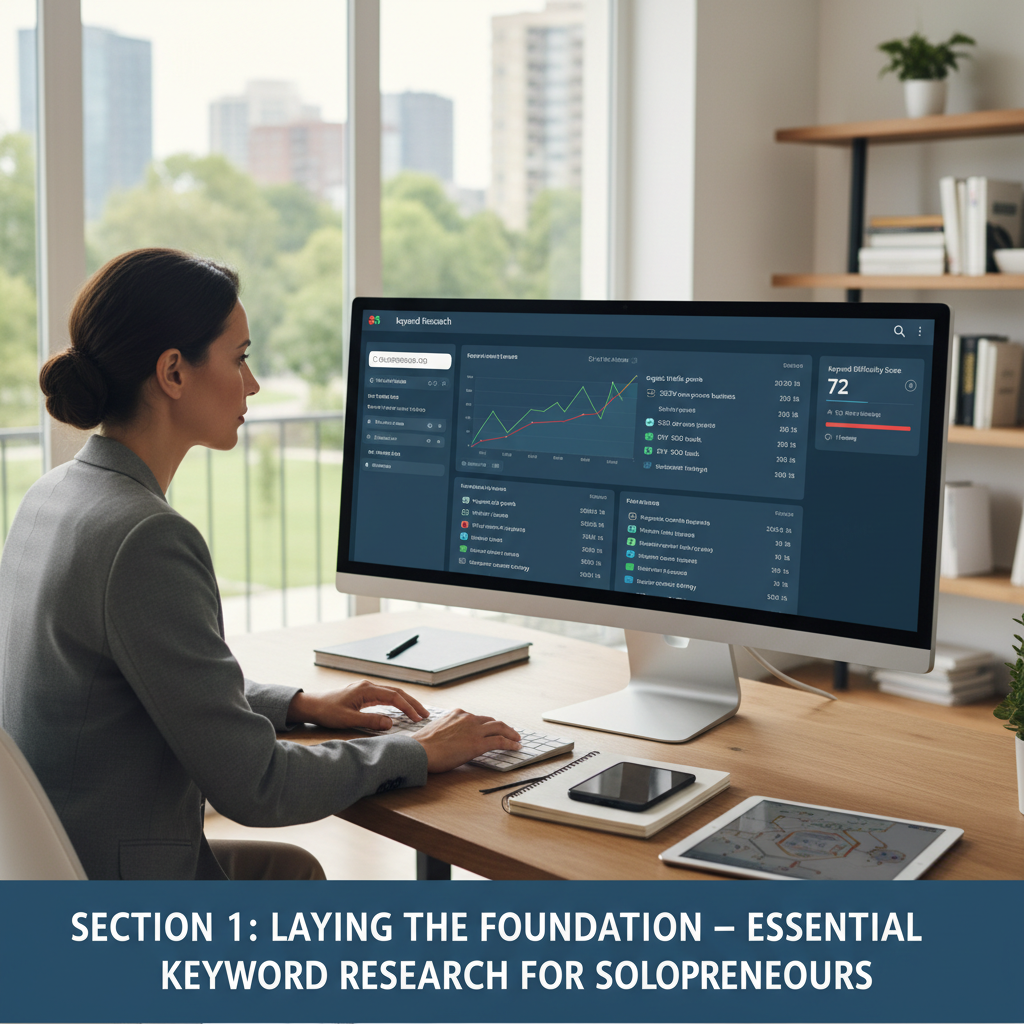
While you can uncover basic ideas using Google’s autocomplete and "People also ask" sections, a dedicated platform is essential for strategic growth. This is precisely where Rank My Website shines. It moves beyond simply listing keywords and automates the entire workflow from discovery to publication. You provide target keywords, and our platform generates a complete, SEO-optimized article, including on-page optimizations, ready for you to publish.
For the best results, focus on long-tail keywords. These are longer, more specific phrases (e.g., "cost-effective SEO content strategy for startups") rather than broad terms ("SEO strategy"). They have less competition and attract visitors who are much closer to converting. The key is finding the sweet spot: a keyword with a manageable difficulty score and enough monthly search volume to make a difference. Many modern platforms leverage AI for keyword research automation in 2026 to pinpoint these valuable opportunities, streamlining a once-tedious process.
Content is King (Still) – Crafting SEO-Optimized Articles
Even in 2026, the old SEO adage holds true: content is king. Search engines are designed to find and reward the most helpful, relevant answers to a user's query. This means that creating high-quality, valuable content is the cornerstone of any effort to grow organic traffic without an SEO team. Your goal is not to trick algorithms but to genuinely serve your audience. By focusing on providing real value, you align your goals directly with Google's, creating a sustainable path for growth.
Structuring Your Content for Readability and Search Engines
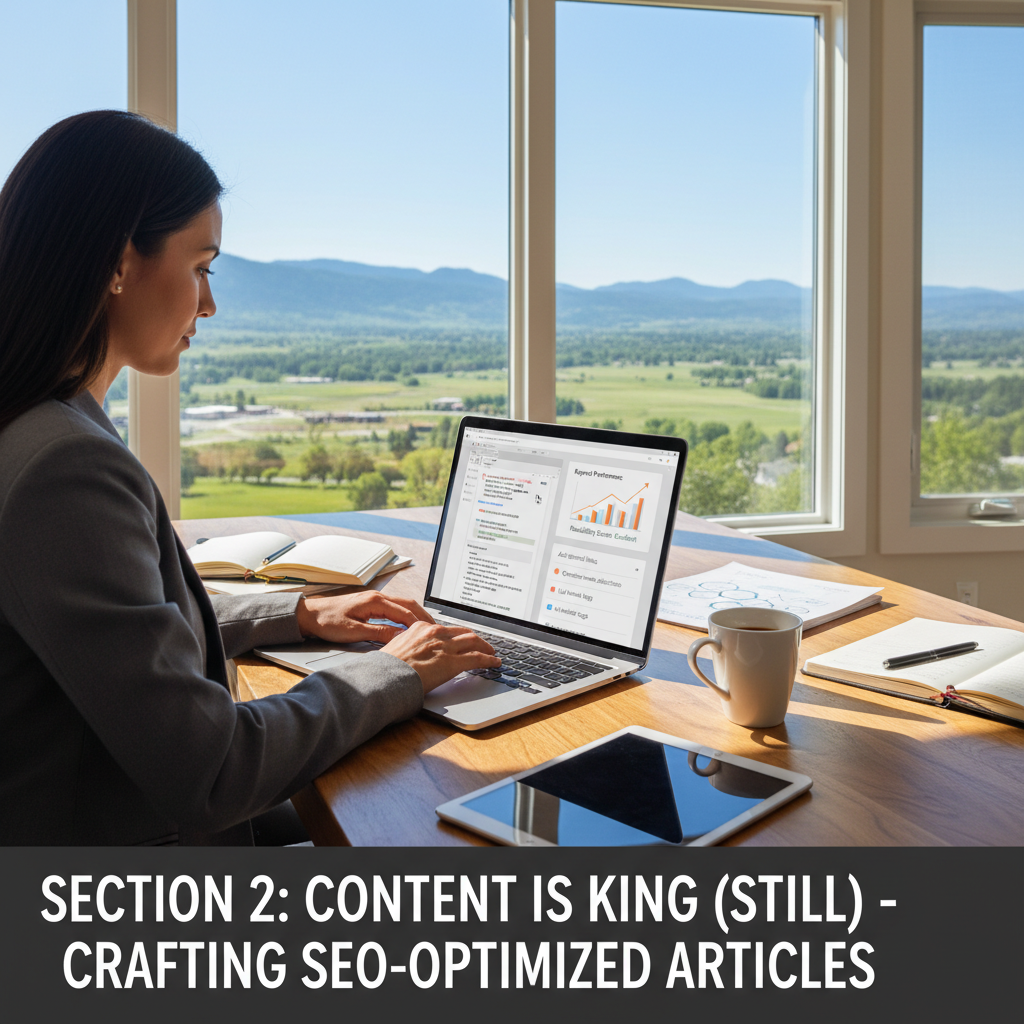
A brilliant article is useless if it's unreadable. A clear structure helps both your visitors and search engine crawlers understand your content's hierarchy and key themes. Start with a proper heading structure (H2s for main sections, H3s for sub-points) to break up the text. Use short paragraphs and concise sentences to improve scannability, especially for mobile users who make up a significant portion of online traffic.
On-page SEO fundamentals are critical here. Every article needs a compelling meta description to entice clicks from search results and a logical internal linking strategy. Linking to other relevant articles on your site helps users discover more of your content and signals to search engines how your pages are interconnected, distributing authority across your domain.
Integrating Keywords Naturally and Effectively
The days of stuffing your primary keyword into every other sentence are long gone. Today, effective keyword integration is about seamless, natural placement. Your focus should always be on creating a great reading experience. A good practice is to include your main keyword in your title, the introductory paragraph, and perhaps one or two subheadings where it makes sense.
Beyond that, think semantically. Google understands synonyms and related concepts. By including related terms and answering adjacent questions, you demonstrate topical authority and depth. This approach is far more powerful and future-proof. Remember, content freshness also matters. Regularly updating your key articles with new information signals to Google that your content is still relevant, making it a sustainable way to grow organic traffic without an SEO team. Building this into a cost-effective SEO content strategy for 2026 is a smart move for any business.
Automating Your SEO Workflow with Rank My Website
Consistently creating and optimizing content is the engine of organic growth, but it's also the most resource-intensive part of SEO. For entrepreneurs and small businesses, the hours required for research, writing, and on-page tweaks are often unavailable. This is where automation becomes a game-changer. Platforms like Rank My Website are designed to act as your digital SEO specialist, putting your content strategy on autopilot so you can focus on running your business.
Streamlining Content Generation and Optimization
The first step in any SEO content plan is turning keywords into high-quality articles. Rank My Website simplifies this entire process. Instead of spending hours manually outlining articles and researching competitors, you simply provide your target keywords. The platform then generates a complete, SEO-optimized article ready for your review.
Crucially, this goes beyond simple text generation. Rank My Website includes built-in on-page SEO tools that handle the technical details for you—from meta descriptions and title tags to proper heading structure. This level of automation is essential for businesses that want to grow organic traffic without an SEO team, ensuring every piece of content published is primed to rank from day one. For a deeper dive, explore our guide on AI Content for Small Business SEO: 2026 Guide.
Publishing and Monitoring for Consistent Results
Creating a single great article is one thing; building a consistent publishing schedule that search engines reward is another. Google favors websites that regularly provide fresh, valuable content. Rank My Website is built to facilitate this content velocity. By generating and publishing SEO-optimized content directly to your site, it establishes a steady drumbeat of activity that signals relevance and authority. This consistent output creates a powerful flywheel effect: more content leads to more indexed pages, which leads to more keyword rankings, and ultimately, a sustained increase in organic traffic. It’s a proactive strategy for growth, not a reactive one.
Section 4: Technical SEO Basics You Can Handle
"Technical SEO" might sound intimidating, but many core elements are completely manageable. Handling these foundational tasks is a crucial step if you want to grow organic traffic without an seo team. You don't need to be a developer; you just need to focus on giving users and search engines a clear, fast, and logical experience.
Website Speed and Mobile-Friendliness
In 2026, a slow website is invisible. Users expect pages to load in under three seconds, and so does Google. A slow site leads to high bounce rates, which tells search engines your page isn't valuable. Similarly, with a majority of searches happening on mobile devices, your site must look and function perfectly on a smartphone. This is called mobile-friendliness.
Thankfully, most modern website platforms like Shopify and WordPress automatically optimize for mobile. Your main job is to keep your site fast by compressing image files before uploading them and choosing a reliable hosting provider.
Site Structure and User Experience
Imagine trying to find a product in a disorganized department store—it's frustrating. The same goes for your website. A logical site structure acts as a clear map, guiding both users and search engine crawlers. Your navigation should be intuitive, with main categories in your top menu and related subpages nested underneath. This hierarchy helps spread "link equity" and makes it easy for Google to understand which pages are most important. A strong foundation is essential for any SEO Content Generation for New Websites in 2026.
XML Sitemap and robots.txt
Building Authority: Link Building Strategies for the Busy Entrepreneur
Creating excellent content is half the battle; the other half is building authority. In Google's eyes, authority is primarily measured by backlinks—links from other websites pointing to yours. Think of each quality backlink as a vote of confidence, signaling to search engines that your content is trustworthy and valuable. Mastering a few key strategies is essential to grow organic traffic without an SEO team.
Understanding Quality Backlinks
It’s crucial to understand that not all links are created equal. A single link from a well-respected industry publication is worth more than a hundred links from low-quality, irrelevant directories. The goal is quality over quantity. A quality backlink comes from a site that is:
- Relevant: The linking site operates in your niche or a related field.
- Authoritative: The site has its own strong reputation and traffic.
- Trustworthy: The site is a legitimate source of information, not a spam farm.
Practical Link Building Tactics for Small Businesses
You don’t need a dedicated team to earn powerful backlinks. Guest posting is one of the most effective methods. Identify non-competing blogs or online magazines in your industry and offer to write a valuable article for their audience. In return, you get an author bio with a link back to your website. This not only builds a quality backlink but also establishes you as an expert.
Another powerful tactic is to engage in online communities where your potential customers hang out. Participate genuinely in relevant conversations on platforms like LinkedIn, Reddit, or specialized industry forums. Answer questions and offer solutions. When appropriate, you can share a link to a resource on your site that provides further detail. The key is to be helpful first and promotional second. Consistently creating exceptional content is the foundation for this; our AI Content for Small Business SEO: 2026 Guide provides a framework for this. Ultimately, having great assets to link to makes it much easier to grow organic traffic without an SEO team.
Measuring Your Success and Adapting Your Strategy
Flying blind is not a strategy. To effectively grow organic traffic without an SEO team, you must measure your efforts. Data is your compass, guiding you toward what's working and what needs refinement. This feedback loop of analysis and action is the engine that drives sustainable growth, transforming guesswork into a predictable process.
Key Metrics to Track for Organic Traffic Growth
Your two most vital—and free—tools for this task are Google Analytics 4 (GA4) and Google Search Console (GSC). Think of GSC as telling you how you perform on Google's search results page, while GA4 reveals what users do once they arrive on your site.
In Google Search Console, pay close attention to:
- Impressions: How often your site appears in search results.
- Clicks: The number of times users click through to your site.
- Click-Through Rate (CTR): The percentage of impressions that result in a click. A low CTR for a page with high impressions is a major red flag, often indicating a weak title tag or meta description.
- Average Position: Your average ranking for specific keywords.
Inside Google Analytics 4, navigate to the "Traffic acquisition" report and filter for organic search. Here, your focus should be on Organic Users, Sessions, and Engagement Rate. A low engagement rate on a high-traffic article signals a disconnect between your content and your visitors' expectations, suggesting the content may need improvement.
Iterating and Refining Your SEO Efforts
Data is only useful when you act on it. True SEO success comes from a continuous cycle of publishing, measuring, and refining. Found a page with high impressions but a dismal CTR? It's time to test new, more compelling title tags. Noticed a popular page has a low engagement rate? Revisit the content to better match user intent, improve its readability, or add supportive visuals and internal links.
FAQs About Growing Organic Traffic Without an SEO Team
How long does it take to see organic traffic results?
Patience is a virtue in SEO. While you might see small wins within the first few months, it generally takes 4-6 months of consistent effort to see a noticeable impact on your organic traffic. For substantial, long-term growth, a 6-12 month timeframe is more realistic. The key is consistency in publishing high-quality, keyword-optimized content. An automated platform can significantly help maintain this momentum, accelerating your timeline by ensuring you never fall behind on your content schedule. This is a crucial part of the strategy to grow organic traffic without an SEO team.
Can I really compete with larger companies without a dedicated SEO department?
Absolutely. While you may not outrank them for broad, high-volume keywords overnight, you can win by being smarter and more focused. Target long-tail keywords—longer, more specific phrases—that your larger competitors often ignore. These keywords have lower competition and higher conversion intent. Focus on creating deep, authoritative content for your niche audience. As a smaller business, your agility is your advantage, allowing you to quickly pivot and dominate these specific topic areas before bigger players even notice.
What are the most common SEO mistakes to avoid?
Many businesses trying to grow organic traffic without an SEO team stumble into common pitfalls. The most frequent mistakes include: publishing content without doing prior keyword research, creating thin or low-quality articles, neglecting basic on-page SEO like title tags and meta descriptions, and ignoring the mobile user experience. Another major error is inconsistency—publishing five articles one month and none the next. A systematic approach, guided by a tool like Rank My Website, helps you avoid these errors by baking SEO best practices directly into your content workflow.
Is Rank My Website suitable for e-commerce businesses?
Conclusion: Your Path to Organic Traffic Success Starts Now
The journey to the top of search engine results pages is no longer a path reserved for corporations with massive marketing departments. As we've explored, the goal to grow organic traffic without an SEO team is more achievable in 2026 than ever before. It hinges on a smart, consistent strategy built on foundational pillars: understanding your audience's intent, creating genuinely valuable content, and mastering the essentials of on-page optimization. You don't need to be a technical wizard; you just need to be committed to the process.
But commitment alone can be drained by the sheer time it takes to execute. This is where strategy meets automation, and where your real growth begins.
Recap of Key Strategies
The core principles are straightforward. You now understand how to conduct effective keyword research to find what your customers are searching for. You know the importance of building topic clusters to establish authority and creating content that answers questions, solves problems, and engages your audience. Finally, you’re equipped with the knowledge of on-page SEO basics—optimizing titles, meta descriptions, and images—to give your content the best possible chance to rank. These are the ingredients for success. Now, you need the perfect tool to help you cook.
Empowering Your Business with Rank My Website
Knowing what to do is one thing; having the time and resources to do it consistently is the real challenge for most businesses. That’s why Rank My Website was built. It’s the engine that powers your entire content strategy, specifically designed to help you grow organic traffic without an SEO team. Instead of spending countless hours researching, writing, and optimizing, you can generate perfectly SEO-optimized articles from your keywords in minutes.
Rank My Website automates the heavy lifting, from content creation to a full suite of on-page SEO tools, ensuring every piece you publish is primed for peak performance. It’s not just about saving time; it’s about deploying a professional-grade SEO content strategy on autopilot. Your path to sustainable organic growth doesn't have to be a slow, manual grind. Don't let a lack of resources hold you back any longer. Ready to see your organic traffic take off? Start generating SEO-optimized content with Rank My Website today.