Ecommerce SEO: Overcoming Internal Chaos and Technical Debt
Ecommerce SEO faces immense challenges from internal complexity, inventory bloat, and technical debt. Learn to impose order on digital chaos for scalable...

Understanding Ecommerce SEO Challenges in 2026: A Practitioner's Guide
Most ecommerce stores believe their primary SEO battle is against Google's algorithm. They're wrong. The real war is waged internally against self-inflicted complexity, unchecked inventory bloat, and technical debt. Understanding ecommerce SEO challenges isn't about outsmarting a search engine; it's about imposing order on your own digital chaos. The core challenges are managing immense scale, resolving complex technical issues like faceted navigation, creating unique content for thousands of similar products, and building authority for transactional pages that don't naturally attract links. Success comes from systematic solutions, not isolated tactics.
The Sheer Scale of It All: Managing Thousands of Pages
An ecommerce site isn't a neat 10-page brochure. It's a sprawling digital metropolis with thousands, sometimes millions, of pages. A single new product line can add hundreds of URLs overnight. This scale is the root of many SEO problems, from content quality to technical health. Without automation and strict governance, your site can quickly become a wasteland of low-value pages that drain your crawl budget and dilute your authority.
Taming the Beast: The Problem of Thin and Duplicate Content
When you have 10,000 SKUs, writing a lovingly crafted, 1,000-word description for each is a pipe dream. The result? Pages with a single image and a 20-word blurb copied from the manufacturer. This is "thin content," and search engines see it as low-value. Worse is duplicate content, where multiple URLs show the exact same information. This often happens with product variations (size, color) that generate unique URLs without unique content. Google is forced to choose which page to rank, and often it just gives up and ranks none of them highly.
Crawl Budget Optimization for Massive Inventories
Search engines don't have infinite resources. They allocate a "crawl budget" to your site—a rough measure of how many pages they will crawl and how often. On a 50-million-page ecommerce site, this budget is precious. If Googlebot spends its time crawling thousands of pointless filtered URLs, out-of-stock product pages, and internal search results, it may never find your new high-margin product category or your cornerstone blog content. Effective crawl budget management involves strategically using robots.txt, rel="canonical" tags, and noindex directives to guide search engine spiders to your most important pages.
Automating Metadata at Scale Without Sounding Robotic
Manually writing title tags and meta descriptions for an entire catalog is impossible. The default solution is to create a template: "[Product Name]
| [Category] |
|---|
Common Technical SEO Challenges for E-commerce
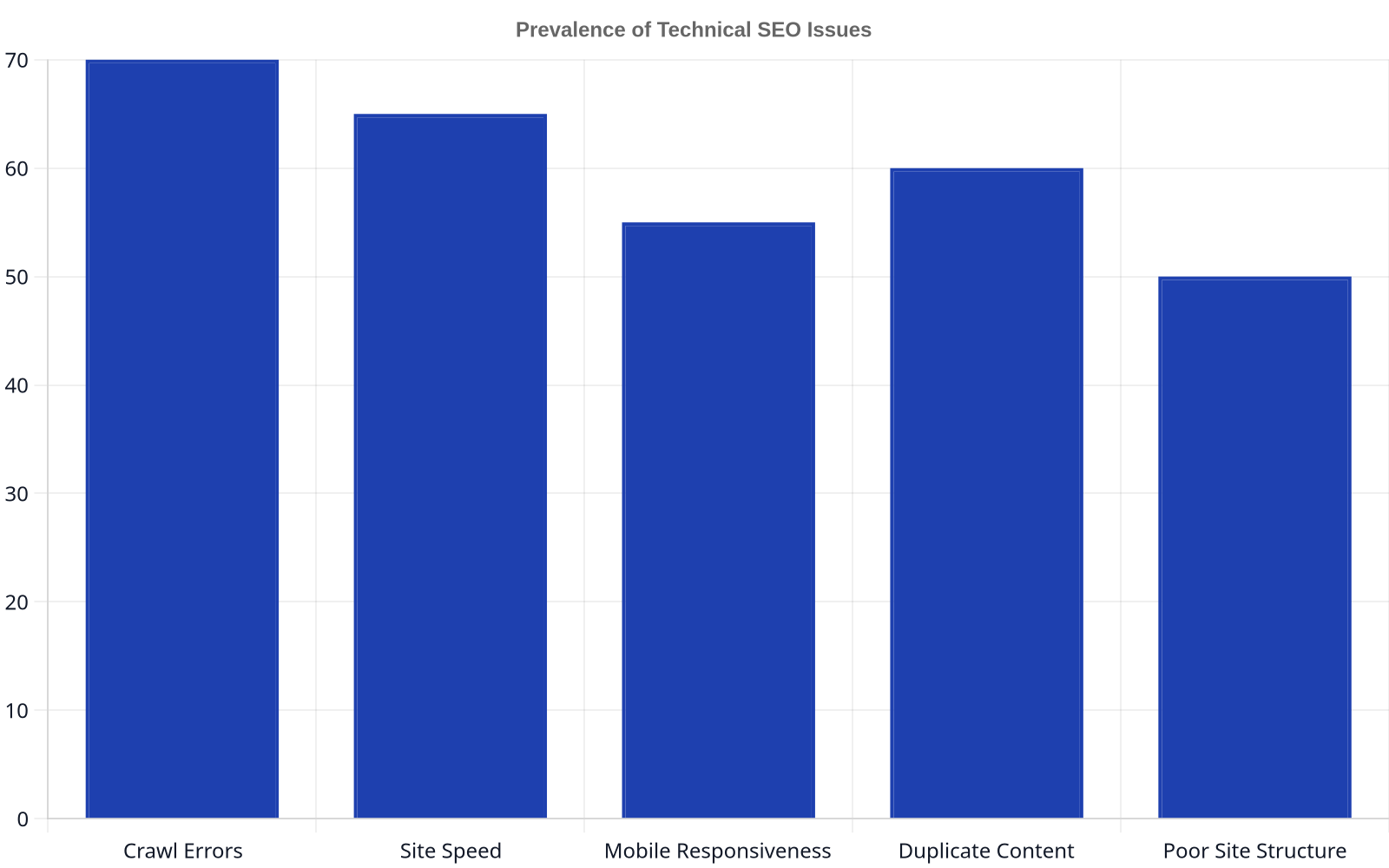
Technical SEO is the foundation upon which all other efforts are built. For ecommerce sites, this foundation is uniquely complex, stressed by layered navigation, high-resolution media, and the constant demand for structured data. Ignore these issues, and even the best content and backlinks will fail to perform.
Navigating Faceted Navigation and Parameter URLs
Faceted navigation—the filters for size, color, brand, and price—is fantastic for users but a nightmare for SEO. Every combination can create a new parameter-based URL (e.g., ?color=blue&size=medium), potentially generating millions of low-value, duplicate-content URLs. According to Google Search Central, mastering faceted navigation involves a combination of AJAX, rel="canonical", and careful use of the robots.txt file to prevent crawlers from getting lost. The goal is to allow users to filter freely while ensuring search engines only index the primary, high-value category pages.
Site Speed and Core Web Vitals for Product Pages
In ecommerce, speed equals revenue. A site that loads slowly bleeds conversions. According to a 2022 study by Deloitte, even a 0.1-second improvement in site speed can boost conversion rates by 8%. Product pages are often the worst offenders, loaded down with high-resolution images, third-party review scripts, and personalization trackers. Optimizing for Google's Core Web Vitals—Largest Contentful Paint (LCP), First Input Delay (FID), and Cumulative Layout Shift (CLS)—is non-negotiable. This means compressing images, deferring non-critical JavaScript, and using a Content Delivery Network (CDN).
Schema Markup for Products, Reviews, and More
Schema markup is a vocabulary of code you add to your site to help search engines understand your content. For ecommerce, it’s a goldmine. Using Product schema from Schema.org can generate rich snippets in search results, showing price, availability, and review ratings directly on the SERP. This makes your listing stand out and can significantly improve click-through rates. Properly implemented schema for products, reviews, and breadcrumbs provides search engines with explicit, unambiguous information, removing the guesswork and improving your chances of ranking correctly.
Content and Keyword Strategy Hurdles
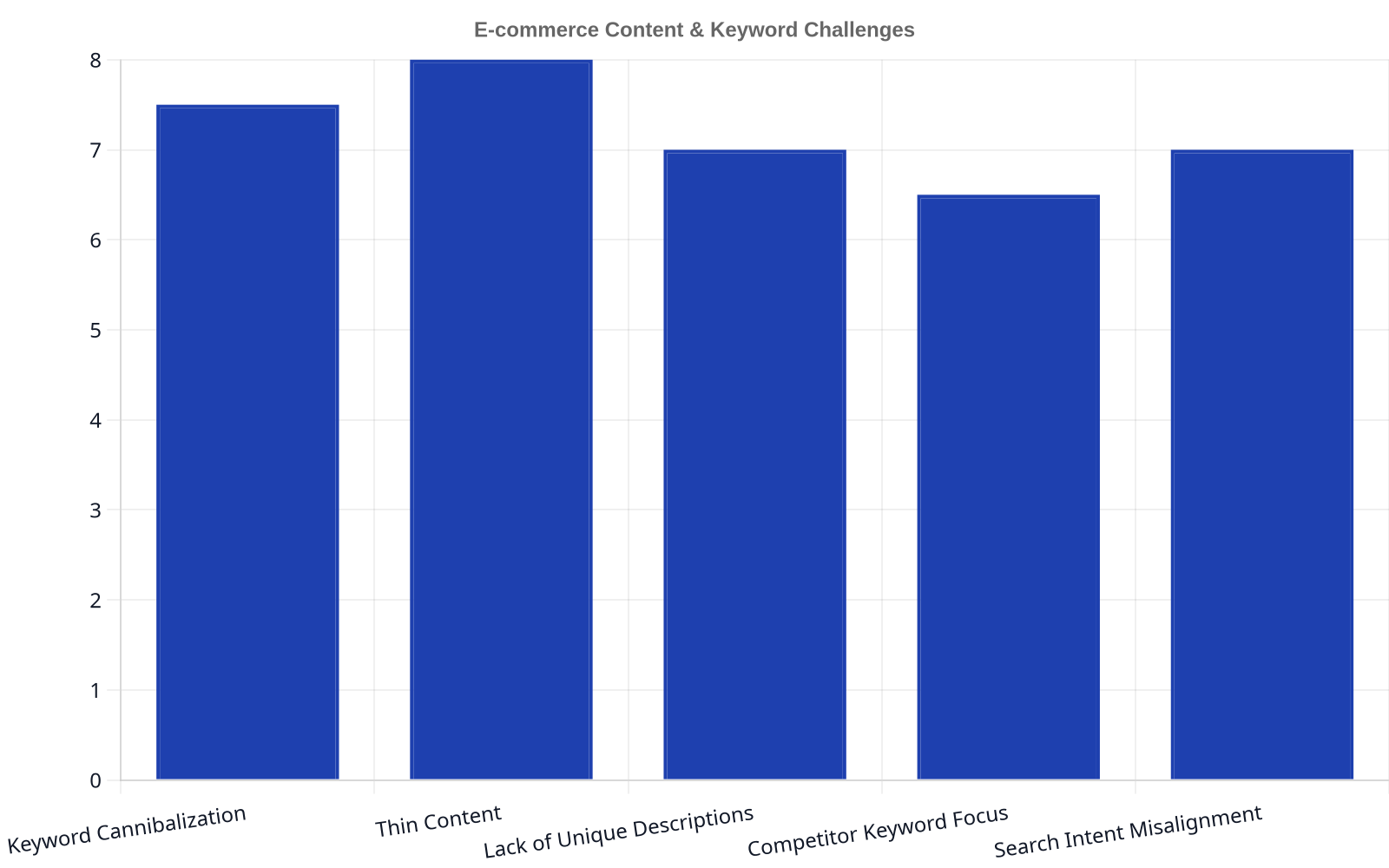
Content for ecommerce isn't just about the blog. It’s about every word on your category and product pages. The primary challenge is creating content that serves both the user's transactional intent and the search engine's need for unique, authoritative information. This is where many stores falter, creating a sea of pages that look identical to both bots and humans.
The biggest mistake in ecommerce content is writing for the product instead of the problem. A customer doesn't search for "Model X-37b submersible pump." They search for "how to get water out of my flooded basement."
Keyword Cannibalization: When Your Own Pages Compete
Keyword cannibalization happens when multiple pages on your site target the same or very similar keywords. The result is that you dilute your authority and confuse search engines, which then splits the ranking signals between your competing pages. An ecommerce store might have a category page for "running shoes," a blog post on "the best running shoes of 2026," and a specific product page for a top-selling shoe all vying for the same term. A proper keyword research strategy maps specific intents to specific page types, ensuring that long-tail keywords lead to product pages and broad terms lead to category or informational guides.
The Product Description Conundrum: Unique vs. Manufacturer Copy
Using the manufacturer's provided product description is easy. It's also what every other retailer is doing. This creates a massive duplicate content problem across the web. While rewriting every description is a monumental task, it’s one of the most powerful on-page SEO levers you can pull. Prioritize your top-selling products first. Go beyond specs and talk about benefits, use cases, and what makes the product special. This unique copy is not just for SEO; it helps buyers make a decision, which is the ultimate goal.
Product Description Approaches: A Comparison| Approach | SEO Impact | Implementation Effort | Conversion Impact |
|---|---|---|---|
| Manufacturer Copy | Negative (Duplicate Content) | Very Low | Low |
| Slightly Modified Copy | Minimal (Still high similarity) | Low | Low-Medium |
| AI-Generated Unique Copy | Medium-High (If well-prompted) | Medium | Medium |
| Human-Written Unique Copy | Very High (Best for authority) | Very High | High |
Beyond Products: Creating Content That Builds Authority
Product pages attract buyers. Informational content attracts links and authority. An ecommerce SEO strategy that ignores top-of-funnel content is incomplete. This means publishing daily articles, guides, tutorials, and comparison pieces that solve your customers' problems. A store selling high-end cameras should have articles on "understanding exposure triangles" or "best lenses for portrait photography." This content captures users before they're ready to buy, builds trust, and, most importantly, provides a valuable asset to attract backlinks—something product pages struggle to do.
Link Building and Authority Challenges
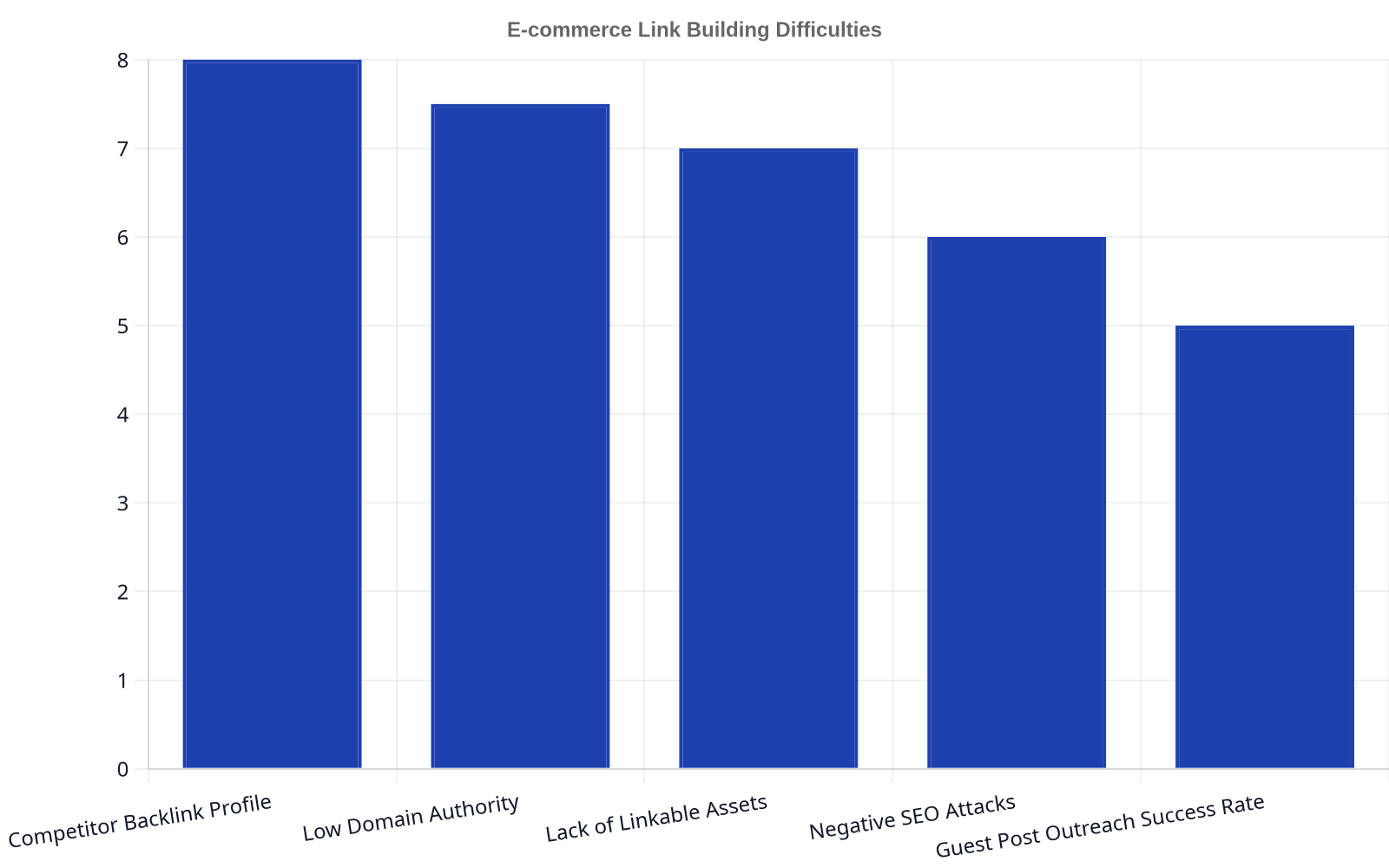
Link building for ecommerce is notoriously difficult. Nobody wants to link to a product page. Why would a blogger or journalist send their audience to a page that exists solely to make a sale? This requires a more creative and strategic approach to building domain authority, which is a critical factor in competitive search rankings.
In ecommerce, you don't earn links for the things you sell. You earn them for the expertise you share. Your blog and resource center are your link-building engines, not your product catalog.
Why Product Pages Don't Naturally Attract Backlinks
As a detailed analysis by Ahrefs points out, the transactional nature of product and category pages makes them poor link targets. Authoritative sites link to resources, data, and compelling stories. A product page is none of those things. Expecting your product pages to accumulate a powerful backlink profile on their own is a recipe for failure. Their authority is almost entirely derived from the internal link equity passed to them from other, more link-worthy pages on your own site.
Securing High-Quality Links in a Transactional World
If product pages are out, what's in? The answer is your informational content. This is where your investment in guides, tools, and blog posts pays off. Link-building tactics for ecommerce include:
- Creating Definitive Guides: Publish the best, most comprehensive guide on a topic relevant to your products.
- Original Research/Data: Survey your customers or analyze your own sales data to create a unique study others will want to cite.
- Free Tools: Develop a simple calculator or configurator that helps users solve a problem (e.g., a "how much paint do I need?" calculator for a hardware store).
- Digital PR: Create newsworthy campaigns or stories related to your industry that journalists will want to cover.
Leveraging Internal Linking to Distribute PageRank
Since your product pages won't earn many external links, internal linking becomes your primary tool for sculpting authority. The powerful link equity generated by your blog posts and guides must be strategically passed to your top category and product pages. This isn't about just cramming a few links in the footer. It requires a deliberate structure where informational content logically links to relevant subcategories, which in turn link to specific products. This is how you tell Google, "This product page is important, even though it doesn't have external links." We’ve seen this exact strategy work for clients like wolverine-llc.com, where building content hubs drove authority to critical industrial product pages.
The Analytics and Reporting Black Hole
For an ecommerce business, data is everything. Yet, many struggle with SEO reporting, drowning in a sea of metrics that don't tie back to the one that matters: revenue. Understanding ecommerce SEO challenges extends to measuring your results accurately.
Tracking Keyword Rankings Across a Vast Product Catalog
Tracking your rank for 5-10 primary keywords is easy. Tracking tens of thousands of long-tail product keywords is a data management nightmare. Manual tracking is out of the question. This requires an enterprise-level rank tracking tool that can handle massive keyword lists, segment them by category, and report on changes at a granular level. The goal isn't to obsess over daily fluctuations but to identify broad trends—is the "men's boots" category trending up or down? Are we losing visibility for a specific brand?
Attributing Revenue to Specific SEO Efforts
This is the holy grail of SEO reporting. Did that new blog post actually lead to sales? Did optimizing the checkout category page increase revenue? Answering these questions requires sophisticated analytics setup. You need to configure ecommerce tracking in Google Analytics 4, set up custom funnels, and use attribution models that look beyond the "last click." For example, a user might discover your brand through an organic search for a "how-to" guide, leave, and then come back a week later via a branded search to make a purchase. A last-click model would incorrectly give all the credit to the branded search, ignoring the crucial role of your initial SEO-driven content.
Integrating SEO Data with Other Business Intelligence
SEO data doesn't live in a vacuum. It's most powerful when combined with other business data. For instance, you can overlay your keyword ranking data with your inventory data. Are you ranking #1 for a product that is out of stock? That's a critical, revenue-losing insight. Are your paid search and organic search teams targeting the same keywords, driving up CPCs and cannibalizing efforts? Integrating SEO metrics into a central business intelligence (BI) dashboard—alongside sales, inventory, and margin data—allows for holistic, strategic decision-making instead of siloed channel optimization.
FAQ
What is the biggest SEO challenge for a new ecommerce store?
For a new store, the biggest challenge is a lack of authority. Without an established backlink profile or brand recognition, it's incredibly difficult to rank for competitive commercial keywords. The initial focus should be on creating exceptional, problem-solving content to start building topical relevance and attracting those first crucial links, while also ensuring all technical SEO basics are flawless from day one.How can I fix duplicate content on my product pages?
Start by conducting a crawl of your site to identify duplicate and thin content pages. For product variants (size, color) that create unique URLs, use a canonical tag pointing back to the main product page. For manufacturer descriptions, prioritize rewriting the copy for your top 20% best-selling products first. For faceted navigation, use yourrobots.txt file to block crawlers from most parameter-based URLs and use canonicals to consolidate signals.
Is it better to have more products or better-optimized product pages?
A smaller number of well-optimized, unique, and compelling product pages will almost always outperform a massive catalog of thin, duplicate-content pages. Quality trumps quantity. A large, un-optimized catalog can hurt your site's overall SEO health by draining crawl budget and creating a poor user experience. Focus on optimizing what you have before aggressively expanding your SKU count.Why is my ecommerce site so slow?
Ecommerce sites are often slow due to un-optimized, high-resolution images, which are the most common culprits. Other factors include an abundance of third-party scripts (for analytics, reviews, chat), inefficient code (JavaScript, CSS), and a slow hosting server. Use Google PageSpeed Insights to diagnose specific issues. Image compression, using a CDN, and deferring non-essential scripts are typically the most effective fixes.How much should I budget for ecommerce SEO?
This varies wildly based on your industry competitiveness, the size of your catalog, and your goals. A small niche store might see results with a few thousand dollars a month, while a large retailer in a competitive space could spend tens or even hundreds of thousands. Instead of a dollar figure, think in terms of resources needed to address the core challenges: technical audits, content creation for both products and blogs, and link-building outreach. You can find more details in our guide to ecommerce seo pricing guide.Addressing the unique and complex SEO challenges of an ecommerce business requires a systematic, technically-sound, and automated approach. From managing a sprawling catalog to creating content that earns authority, the solution lies in building a scalable process rather than chasing algorithms. If you're ready to stop fighting fires and start building a self-sustaining engine for organic growth, see how Rank My Website can help you automate your way to the top of the SERPs.