Best SEO Content Writing Practices for 2026
Master the best SEO content writing practices for 2026. This guide covers keyword research, user intent, E-E-A-T, and advanced strategies to rank higher.
The Ultimate Guide to the Best SEO Content Writing Practices in 2026
In the hyper-competitive digital landscape of 2026, simply publishing content is no longer enough. To capture attention, drive traffic, and achieve meaningful business goals, your content must be discoverable. This is where the art and science of search engine optimization meet the craft of writing. The best SEO content writing practices are the critical link between creating valuable, engaging articles for your audience and signaling that value effectively to search engines like Google. It’s a dynamic discipline that moves far beyond simply inserting keywords into a block of text. True SEO content writing in 2026 is about understanding user intent, demonstrating unparalleled authority, structuring information for maximum readability, and leveraging technology without losing the essential human touch. This comprehensive guide will walk you through a complete framework for mastering the best SEO content writing practices, transforming your content from invisible to indispensable. We will delve into the foundational principles that govern search today, explore advanced strategies for keyword mastery, and provide actionable steps to ensure every piece you publish is engineered for performance.
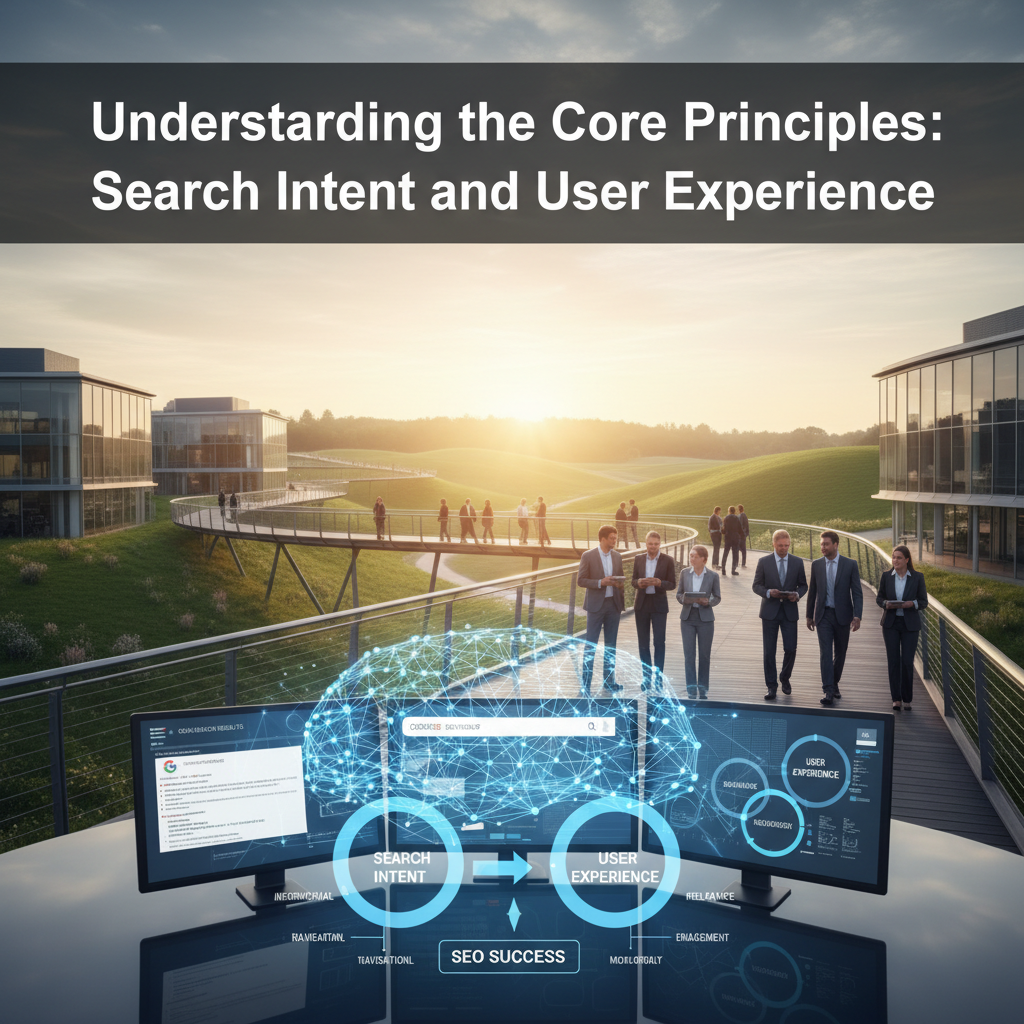
Understanding the Core Principles: Search Intent and User Experience
At the heart of all modern SEO lies a simple but profound concept: search intent. Before you write a single word, the most crucial step is to understand what a user is really looking for when they type a query into a search bar. Failing to match a user's intent is the primary reason why high-quality content often fails to rank. In 2026, Google’s algorithms are more sophisticated than ever at parsing this intent, which generally falls into four categories:
- Informational: The user wants to learn something. (e.g., "what is quantum computing?")
- Navigational: The user wants to go to a specific website. (e.g., "YouTube login")
- Commercial: The user is researching before making a purchase. (e.g., "best 4k tv reviews")
- Transactional: The user wants to buy something now. (e.g., "buy nike air max online")
This focus on intent is intrinsically linked to User Experience (UX). Once a user clicks on your page, your next job is to satisfy them. A positive UX tells Google that your page is a high-quality result for the query. This includes factors like page load speed, mobile-friendliness, and, most importantly, content structure. Is the information easy to find? Is the text broken up into digestible chunks with clear headings? Can the user quickly scan the page to find their specific answer? A seamless experience reduces bounce rates and increases dwell time, both of which are powerful signals to search engines. Ultimately, applying the best SEO content writing practices means being obsessively user-centric. Your goal is to create a resource so comprehensive and easy to navigate that the user has no need to click the "back" button and choose another result.
Mastering Keyword Research and Semantic SEO in 2026
Keyword research remains a foundational pillar of SEO, but the methodology has evolved significantly. The old practice of finding a single high-volume keyword and repeating it ad nauseam is long dead. In 2026, a sophisticated approach that embraces semantic search and topical authority is essential for success. This is a critical component of the best SEO content writing practices.
The focus has shifted from single "head" terms to comprehensive topic clusters. This involves identifying a broad "pillar" topic—like "digital marketing"—and then creating a series of in-depth "cluster" articles that cover specific subtopics, such as "email marketing strategies," "social media advertising," or "local SEO." These cluster pages all link back to the main pillar page, and the pillar page links out to them. This structure signals to search engines that you have a deep and authoritative knowledge base on the subject, making it more likely for your entire cluster of content to rank for related queries.
Long-tail keywords—longer, more specific, and often question-based phrases—are more important than ever. They typically have lower search volume but much higher conversion rates because they map directly to specific user intent. Instead of just targeting "SEO," a smarter strategy targets "how to improve SEO for a small business" or "best SEO content writing practices for e-commerce." Tools like Ahrefs, SEMrush, and even Google's own "People Also Ask" feature are invaluable for uncovering these opportunities.
This leads to the concept of Semantic SEO. Search engines no longer just match exact keywords; they understand synonyms, context, and the relationships between different concepts. Your content should naturally include related terms and entities. If you're writing about "coffee," the algorithm expects to see words like "beans," "roasting," "caffeine," "espresso," and "brew." Integrating these related concepts proves your content's relevance and depth.
Here’s how different keyword types stack up:
| Keyword Type | Search Volume | User Intent | Conversion Potential |
|---|---|---|---|
| Head Term (e.g., "shoes") | Very High | Broad / Unclear | Low |
| Body Keyword (e.g., "men's running shoes") | High | More Specific | Medium |
| Long-Tail Keyword (e.g., "best running shoes for flat feet") | Low | Very Specific | High |
| Question Keyword (e.g., "how to choose running shoes") | Low-Medium | Informational | Medium-High |
Crafting High-Quality Content with E-E-A-T
In the world of SEO, not all content is created equal. Google has heavily prioritized a set of quality criteria known as E-E-A-T, which stands for Experience, Expertise, Authoritativeness, and Trustworthiness. This framework is Google’s way of ensuring that the content it promotes is helpful, accurate, and comes from a reliable source. For content creators, demonstrating E-E-A-T is paramount and a cornerstone of the best SEO content writing practices.
Let's break down each component:
- Experience: This is the newest addition to the framework. Google wants to see that the content is created by someone with demonstrable, first-hand experience in the topic. If you're reviewing a product, have you actually used it? If you're providing a tutorial, have you actually performed the steps yourself? This is demonstrated through authentic storytelling, unique insights, original photos or videos, and details that could only be known by someone who has "been there."
- Expertise: This refers to the creator's credentials and depth of knowledge on the subject. Is the author a certified professional in the field? Do they have relevant education or a long history of work in the industry? For medical or financial topics (known as "Your Money or Your Life" or YMYL), expertise is critically evaluated. Citing credible data, linking to authoritative sources, and featuring clear author biographies with credentials are key ways to showcase expertise.
- Authoritativeness: This is about your overall reputation in your industry. Is your website or brand considered a go-to source of information? Authoritativeness is often built externally. When other well-respected sites in your niche link to your content, it acts as a vote of confidence, boosting your authority. Mentions in industry publications, positive reviews, and a strong backlink profile all contribute.
- Trustworthiness: This is the foundation of E-E-A-T. Users must be able to trust your content and your website. This includes having a secure site (HTTPS), clear contact information, transparent privacy policies, and ensuring your content is factually accurate and free from misleading claims.
Mastering E-E-A-T is not a one-time task; it's an ongoing commitment. It requires a genuine effort to create truly helpful, well-researched, and authentic content. For any writer serious about their craft, making these principles a central part of their workflow is essential to implementing the best SEO content writing practices.
On-Page SEO: The Mechanics of Optimization
While high-level concepts like intent and E-E-A-T are critical, the technical, on-page elements of your content still matter immensely. These are the nuts and bolts that help search engine crawlers understand what your page is about and how it's structured. Getting these right is a fundamental part of the best SEO content writing practices. Think of it as building a solid foundation and clear signposts for both users and search engines.
Title Tags and Meta Descriptions
The title tag is one of the most important on-page SEO factors. It's the blue clickable link that appears in search results and tells both users and Google the primary topic of your page. A great title tag should be between 30-60 characters, include your primary keyword naturally, and be compelling enough to entice a click. Your meta description, the short block of text under the title in search results, doesn't directly impact rankings, but it has a massive impact on click-through rate (CTR). It should be a 120-160 character summary that expands on the title and persuades the user that your page has the answer they need.
Heading Structure (H1, H2, H3)
Proper heading hierarchy is crucial for readability and SEO. Your page should have only one H1 tag, which is typically your main article title. Following that, use H2 tags for the main sections of your article and H3 tags for subsections within those sections. This logical structure does two things: first, it allows users to scan your content easily to find the information they want. Second, it provides a clear outline of your content for search engine crawlers, helping them understand the key topics and the relationship between them. Weaving keywords and related terms into your headings is one of the best SEO content writing practices for signaling relevance.
Internal and External Linking
A well-crafted article doesn't exist in a vacuum. It should be part of a larger web of information. Internal linking involves linking to other relevant pages on your own website. This helps users discover more of your content and helps search engines understand your site's structure and the relationship between your pages. External linking, or linking out to other high-authority, reputable websites, is also important. It shows that you've done your research and allows you to cite sources, which is a key element of demonstrating Trustworthiness and Expertise (E-E-A-T).
Image Optimization
Images and visuals are essential for breaking up text and engaging readers, but they must be optimized. This starts with using descriptive file names (e.g., "best-seo-content-writing-practices-diagram.jpg" instead of "IMG_1234.jpg"). Most importantly, every image should have descriptive alt text. Alt text is what appears if an image fails to load and is what screen readers use to describe the image to visually impaired users. It's also another opportunity for search engines to understand the context of your content.
Structuring Your Content for Readability and Engagement
You can perfectly match searcher intent and have the most well-researched content in the world, but if it’s presented as an impenetrable wall of text, users will leave. The structure and presentation of your content are just as important as the words themselves. The best SEO content writing practices prioritize the reader's experience, ensuring that information is not only valuable but also easy to consume. High engagement signals to Google that users are finding your page useful, which can positively impact rankings.
The first rule of online readability is to abandon the long, dense paragraphs taught in academic writing. Instead, embrace white space. Keep your paragraphs short—no more than three to four sentences. This creates visual breaks, making the content less intimidating and easier to follow, especially on mobile devices where screen space is limited. Use a clear, legible font and ensure there is enough contrast between your text and the background.

Beyond paragraph length, use formatting to guide the reader's eye and highlight key information.
- Headings and Subheadings: As discussed in on-page SEO, these break up the text into logical, scannable sections.
- Bulleted and Numbered Lists: Use these to present steps, examples, or key takeaways in a format that is incredibly easy to digest.
- Bold and Italics: Use these tools sparingly to emphasize crucial terms or concepts. Bolding can draw attention to important definitions, while italics can be used for nuance or quotes.
The Role of AI in Modern SEO Content Creation
The rise of generative AI has fundamentally changed the content creation landscape in 2026. It's impossible to discuss the best SEO content writing practices without addressing the role of artificial intelligence. Used correctly, AI can be an incredibly powerful tool for efficiency and creativity. Used poorly, it can produce generic, inaccurate, and soulless content that fails to rank and alienates audiences. The key is to view AI as an assistant, not a replacement for a skilled human writer.
Here's how to leverage AI effectively:
- Ideation and Outlining: AI is brilliant for brainstorming blog post ideas, generating potential titles, and creating structured outlines. It can help you organize your thoughts and ensure you cover a topic comprehensively.
- Research and Summarization: You can use AI to quickly summarize long research papers or articles, helping you gather information and identify key data points to include in your content.
- Overcoming Writer's Block: When you're stuck on a sentence or a transition, AI can offer several alternatives to get your creative flow going again.
| Aspect | Human-Led Content | AI-Generated Content (Unedited) |
|---|---|---|
| E-E-A-T | High potential to show all four elements | Lacks genuine first-hand Experience |
| Originality | High - unique insights and perspective | Low - remixes existing information |
| Factual Accuracy | High (with proper research) | Can be prone to "hallucinations" |
| Brand Voice | Can be perfectly aligned and nuanced | Often generic and needs heavy editing |
| Efficiency | Slower, more deliberate process | Extremely fast generation |
| Cost | Higher initial cost (time/money) | Lower initial cost (subscription) |
Measuring Success: Analytics and Content Audits
Creating and publishing content is only half the battle. The final, crucial step in the cycle of the best SEO content writing practices is to measure performance, learn from the data, and continuously iterate. Without analytics, you're flying blind, unable to distinguish between what's working and what isn't. Data provides the roadmap for refining your strategy and maximizing your return on investment.
Two primary tools are essential for this process: Google Search Console (GSC) and Google Analytics (GA).
- Google Search Console: GSC gives you direct insight into your site's performance in Google search results. You can see which queries your pages are ranking for, your average position, the number of impressions (how many times your page appeared in results), and your click-through rate (CTR). This data is invaluable for understanding how users are finding you and for identifying content that is visible but not attracting clicks, suggesting a need for better titles or meta descriptions.
This data fuels the content audit process. A content audit is a systematic review of all the content on your website to identify its strengths and weaknesses. You should look for:
- Underperforming Content: Pages that get very little traffic or have low engagement. These may be candidates for a content refresh.
- Content with High Impressions but Low CTR: As mentioned, this content is visible but not compelling. It likely needs a new title and meta description to improve its "curb appeal" in the SERPs.
- Outdated Content: Information that is no longer accurate for 2026. This content should be updated to maintain trust and relevance.
Analyzing performance and continuously improving your content is a demanding process that requires expertise and dedication. If you're ready to see how a strategic, data-driven approach to the best SEO content writing practices can elevate your rankings and drive real business growth, it might be time to partner with experts. Discover how our tailored strategies can transform your content performance by visiting RankMyWebsite to learn more.
Frequently Asked Questions (FAQ)
What is the most important part of SEO content writing?
While all elements work together, the single most important part is understanding and satisfying user intent. If your content doesn't align with what the searcher is actively looking for, no amount of keyword optimization or technical tweaks will make it rank sustainably. The best SEO content writing practices are always built on a user-first foundation.What is the ideal blog post length for SEO in 2026?
There is no "one size fits all" answer. The ideal length is whatever it takes to comprehensively cover the topic and satisfy user intent. Look at the top-ranking pages for your target keyword. Are they 1,500-word guides or 4,000-word deep dives? This gives you a baseline. In general, long-form content (2,000+ words) tends to perform better for informational queries because it allows for greater depth, authority, and opportunities to rank for long-tail keywords.Is keyword stuffing still a thing?
Keyword stuffing—the practice of unnaturally loading a page with keywords—is a relic of the past and is highly detrimental to your SEO efforts. Modern search engine algorithms are sophisticated and can easily detect this practice, which can result in a ranking penalty. The best SEO content writing practices focus on using keywords and related semantic terms naturally within high-quality, readable prose.How can I show "Experience" for E-E-A-T in my writing?
Demonstrate first-hand experience by including unique personal anecdotes, case studies, original photos or videos of you using a product, and details that wouldn't be found in other articles on the topic. Use "I" and "we" to share your own journey or your company's process. The goal is to prove to the reader that you have real-world experience with the subject matter.Can I rank without building backlinks?
While it is technically possible to rank for very low-competition keywords without backlinks, it is extremely difficult to achieve and sustain competitive rankings for valuable terms. Backlinks from reputable, relevant websites are a powerful signal of authority and trust to Google. A comprehensive content strategy should run in parallel with a strategy for earning high-quality backlinks. Think of great content as the "bait" that makes other sites want to link to you.What's more important: content quality or keyword optimization?
This is a false dichotomy; they are two sides of the same coin and are equally crucial for success. High-quality content that isn't optimized for what people are searching for will never be found. Conversely, perfectly optimized content that offers no real value will not satisfy users, leading to low engagement and poor long-term performance. The best SEO content writing practices involve seamlessly integrating smart keyword optimization into the creation of genuinely valuable, high-quality content.Conclusion
The journey through the best SEO content writing practices for 2026 reveals a clear and consistent theme: the future of SEO is profoundly human-centric. While the technical details of optimization remain important, they are now table stakes. True differentiation and sustainable ranking success are achieved by creating content that genuinely serves the user with experience, authority, and trustworthiness. It's about answering questions so completely that the user's search journey ends with you. It’s about structuring that information so clearly that it can be absorbed with ease. And it’s about leveraging powerful tools like AI not as a shortcut to mediocrity, but as an accelerator for creating even more insightful, high-quality work. The discipline is no longer about tricking algorithms but about building a library of resources so valuable that it becomes a genuine authority in its niche. By embracing these principles—a relentless focus on user intent, a commitment to demonstrating E-E-A-T, meticulous on-page optimization, and a data-driven approach to improvement—you can craft content that not only ranks but also builds a loyal audience and drives lasting success.